
Last updated November 24, 2026
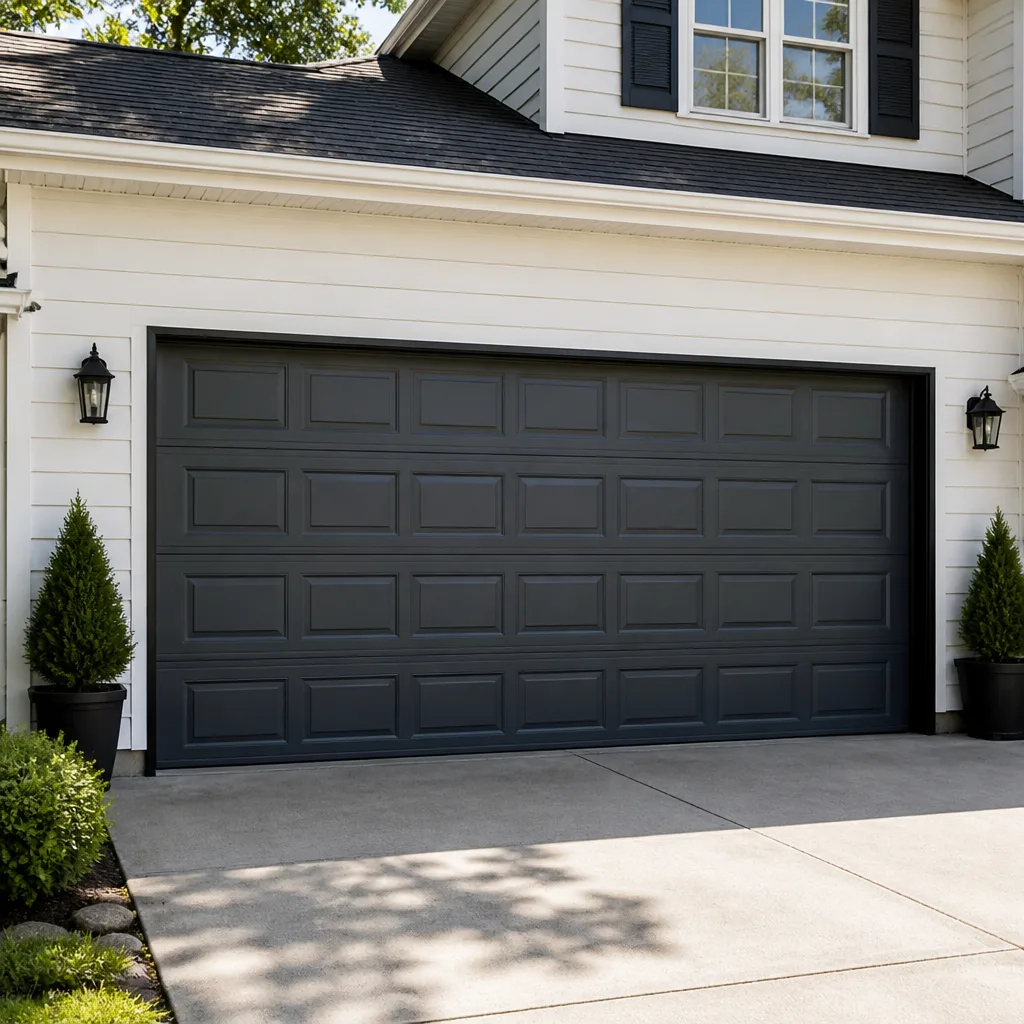 Raised-panel steel
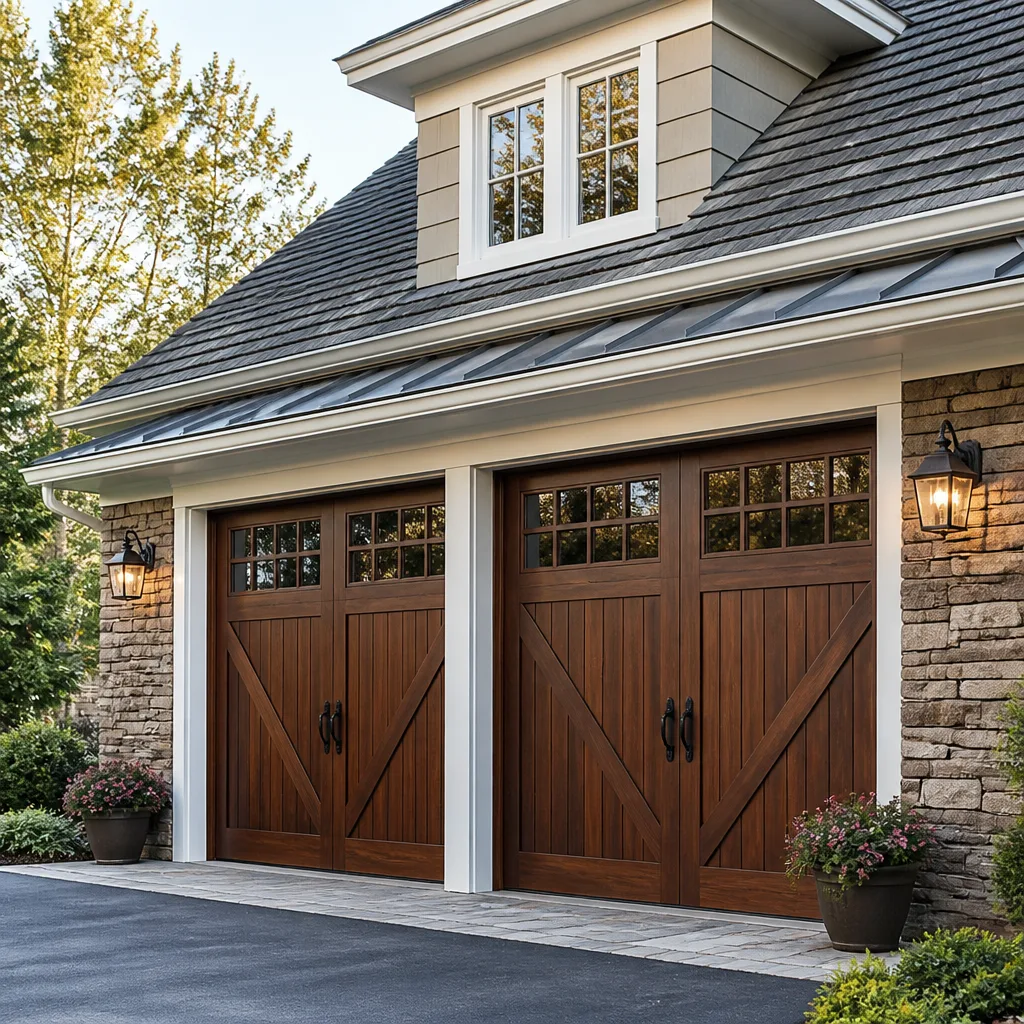 Carriage house
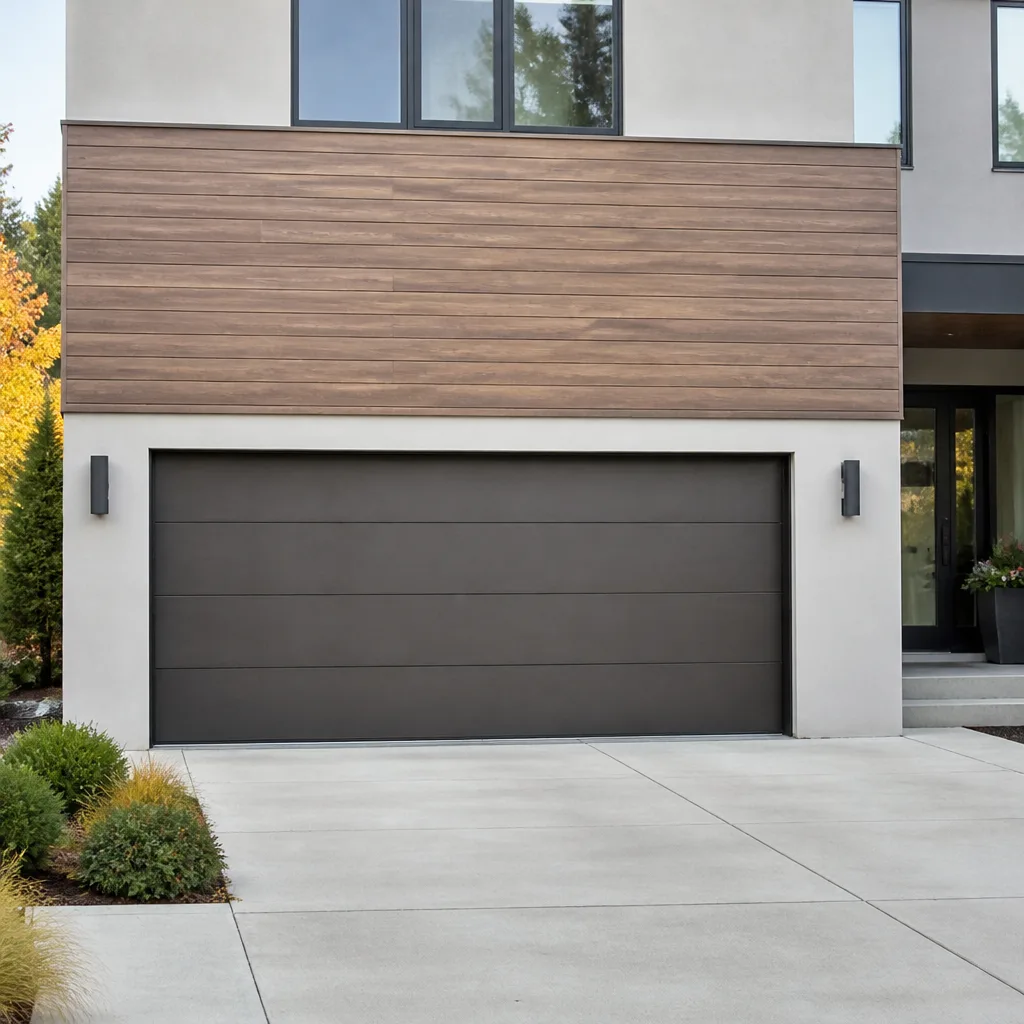 Modern flush
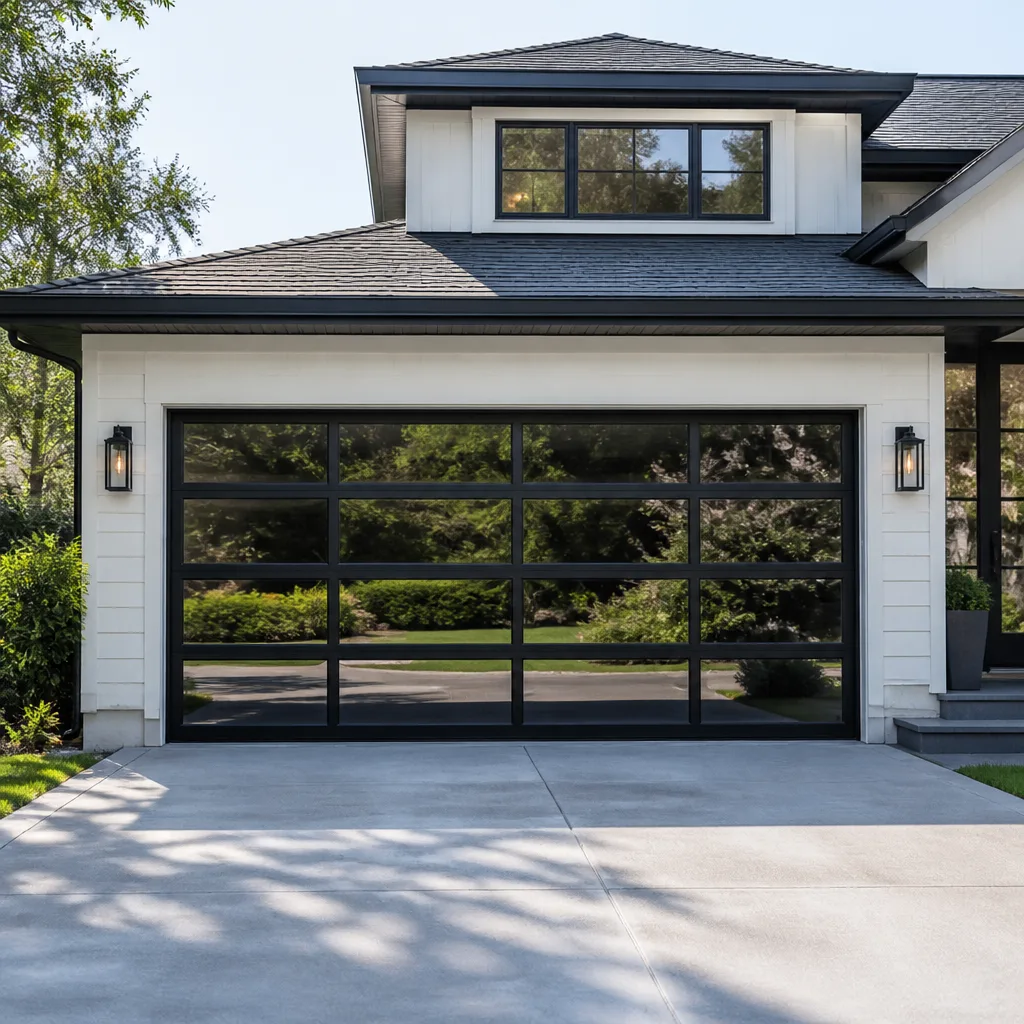 Full-view glass
 LiftMaster openers
 Chamberlain openers
Full 25-point door and opener safety check with every visit - springs, cables, rollers, tracks, and your LiftMaster or Chamberlain opener included
You get a price before we start. It does not change when the pro arrives.
Get your free estimateGarage Door Warning Signs: A Greenwich Homeowner’s Reference Guide
Most garage door failures we’re called to in Greenwich aren’t sudden. They announce themselves first. The trouble is that the announcements are quiet: a grind that only happens on the way back up, a panel that scrapes for a second, a rattle you stop hearing after the third day. Here’s the counterintuitive part. That grinding noise on reversal usually isn’t the opener failing at all. It’s a roller-to-track misalignment that’s been transferring sideways load onto the opener carriage for months, and by the time the opener gives out, the real damage is farther down the system. This guide decodes the specific sounds, movements and visual cues that predict a breakdown, and gives a plain verdict on each: wait, schedule soon, or stop using the door today.
Quick Answer
A garage door that grinds, scrapes, pops, rattles, or moves more slowly than it used to is telling you a component is wearing or has already failed. Stop using the door and call a professional if you hear a loud pop from the springs, see a gap in a cable, or notice the door hanging unevenly, because those are the signs that precede a sudden drop. Slower, quieter symptoms give you time to book a repair before they compound.
Styles & brands we work with
- Raised-panel steel
- Carriage house
- Modern flush
- Full-view glass
- LiftMaster openers
- Chamberlain openers
Table of Contents
- The Sound Diagnostic: What Each Noise Actually Means
- The 60-Second Visual Gap Test
- Why a Door That Just Moves Slowly Is a Serious Warning
- Opener Error Codes That Appear Before Physical Failure
- The Balance Test and What It Tells You About the Springs
- The Three-Strike Rule: When One Fix Is False Economy
- What Changes With the Seasons in Greenwich
- What Happens When You Call
The Sound Diagnostic: What Each Noise Actually Means
Sound is the earliest warning system a garage door has. A door in good order hums. It doesn’t grind, pop or clatter. The trick is that different sounds point to different components, and homeowners often misattribute them, which is how small repairs become large ones. In our experience across Greenwich homes, these four sounds account for most of what we’re asked to inspect.
Grinding
Grinding is metal on metal, and it almost never comes from the opener motor itself. It usually means a roller has worn down or slipped out of alignment with the track, and the door is dragging sideways as it travels. That lateral pressure loads the opener carriage and the hinges long before the motor quits. A grinding door needs the track and rollers inspected, because replacing the opener alone would just repeat the failure with a newer motor attached to a crooked door.
Scraping
A scraping sound is usually a panel or a weather seal rubbing where it shouldn’t. On a sectional door, it often means a hinge has bent or a panel has shifted slightly off square. Left alone, a scraping panel can gouge the finish and eventually crack at the hinge line. It’s rarely urgent, but it’s rarely nothing.
Popping
A single loud pop, followed by the door feeling suddenly much heavier, is the sound of a torsion spring breaking. This is a hard stop. Don’t run the door again. A door with a broken spring is being held up by the opener alone, and that opener is not built to lift the full weight of the door. Springs under tension are genuinely dangerous to touch, which is why we treat spring work as a training-and-tools job, not a homeowner task.
Rattling
Rattling is loose hardware: hinge bolts backing out, roller stems knocking in their brackets, track brackets working free of the jamb. It’s the least dramatic sound and the easiest to ignore, but it’s also the cheapest to fix early. Loose hardware left to vibrate for a season tends to become a bent track or a cracked bottom bracket.
- Grinding: roller or track misalignment. Inspect before the opener pays for it.
- Scraping: panel shift or bent hinge. Book when it repeats.
- Popping: spring failure. Stop using the door now.
- Rattling: loose hardware. Fix it before it bends something.
The 60-Second Visual Gap Test
You don’t need tools or a ladder to catch the two most expensive failures before they happen. A quick visual scan of the cables and springs takes under a minute and can save you a repair later. Do it with the door closed and the opener disconnected, standing where you’d normally park.
- Check the cables for gap or fraying. Run your eyes down both sides of the door along the lift cables. You’re looking for a strand that has frayed, a cable that’s lifted out of its drum, or any visible gap where the cable meets the bottom bracket. A frayed or slack cable is a stop-using-it sign.
- Check spring stretch. On a torsion spring above the door, a healthy spring has even gaps between coils. If the coils are bunched tightly at one end with a wide space at the other, the spring has lost tension. On extension springs along the sides, a stretched or sagging spring means the same.
- Look for rust streaks. Rust on a cable or spring is a sign that moisture has been sitting on the metal. Rust on a cable is a wear indicator because it eats at the strands.
- Check the bottom seal. A gap under the closed door is usually a worn seal, not a structural issue, but worth noting.
If anything in the list above looks off, stop there. Don’t try to adjust a cable or spring yourself. Both store energy and both can injure even experienced technicians when they let go suddenly. Note what you saw and call a professional for an inspection.
Why a Door That Just Moves Slowly Is a Serious Warning
Slow travel is the most misread symptom on this list. Homeowners tend to file it under “getting old” and keep using the door. In practice, a slow door is often a door fighting something it shouldn’t have to fight: a spring that has lost tension, a roller that’s seized, a track that’s out of line, or an opener working against a door it can’t lift. Any of those loads the motor and its drive system directly.
On a torsion-spring door, the springs are the counterweight. They hold most of the door’s weight so the opener only has to guide it. When a spring loses tension, that balance goes off and the opener takes on the full load. A LiftMaster or Chamberlain opener, even a healthy one, gets progressively strained, the motor heats, the travel slows, and eventually the unit fails. You then pay for both the opener and the springs. The slow door is the clue that gets missed before that happens.
In a Greenwich house, this shows up most in older two-car garages where the original hardware is still in place. If the door has been slow for weeks rather than days, the fix is almost never “just replace the opener.” It’s diagnosing the load, then deciding what actually needs to change.
How to judge urgency
- Slowed over days: schedule a diagnostic this week.
- Slowed and now grinds or scrapes: book a repair soon and avoid using it.
- Slowed and now stops partway, reverses, or won’t lift at all: stop using it. This is a same-day call.
Opener Error Codes That Appear Before Physical Failure
Modern openers log fault codes before the hardware gives up. If your unit has a diagnostic LED or an app with a code, checking it saves you a guess. Here’s what the most common units in Greenwich homes tend to show, and what each generally points to.
- LiftMaster 84501: This is a newer smart unit, and fault codes route through the app. Repeated “obstruction” faults with nothing in the path usually mean the safety sensors are misaligned or the door isn’t traveling evenly, not that the sensor is broken. Codes tied to travel limits often trace back to a door that’s out of balance.
- Chamberlain B2405: This belt-drive unit uses a diagnostic LED at the motor head. A small number of flashes repeated in a pattern points to a specific fault: sensor, limit, or motor. The LED pattern is the single most useful clue before you book a repair, so note how many times it blinks and in what sequence.
- Genie StealthDrive: A wall-panel or app code that indicates a force-limit trip is a strong hint that the door is dragging or the spring has lost tension. The StealthDrive will usually try once more and quit, which is exactly the behavior you want before the drive wears further.
If you’re not sure which unit you have, check the motor housing label before you call. Knowing you’ve got a LiftMaster, Chamberlain or Genie on the ceiling means a technician can bring the right diagnostic equipment on the first visit, which matters when you’re in a Greenwich neighborhood and can’t be home for a second appointment. Opener fault codes that persist after a power cycle are worth a call to our garage door opener repair service.
The Balance Test and What It Tells You About the Springs
The balance test is the single best way to judge whether the springs are doing their job. It requires no tools and takes a few minutes. It also tells you whether the door is safe to keep using while you wait for an appointment. Do it with the door closed and the opener disconnected.
- Disconnect the opener using the manual release cord, so the door moves freely.
- Raise the door by hand to about halfway. This is normally safe if the door is light; if it feels very heavy, stop immediately.
- Let go when it’s about halfway up, keeping your hands near the door.
- A balanced door should hold roughly where you let go. A door that drops or rises on its own is out of balance.
If the door sags when you let go, the springs are not carrying their share of the weight. The opener has been doing the extra work, which is why so many “opener failures” are really spring problems. If the door rises on its own, the springs are over-tensioned or the cables are set wrong, which is equally a reason to stop and call a professional. Never try to adjust the spring to correct either result. That’s work for a trained technician with the right tools, and our garage door spring repair covers exactly this kind of diagnosis.
A quick note on cost: in Greenwich, a typical single-spring replacement is in the lower to middle hundreds, and a matched pair, which is often replaced together, is about double a single spring. The written estimate sets the final price, and it’s quoted before any work starts.
The Three-Strike Rule: When One Fix Is False Economy
When a door has shown two or more concurrent symptoms, patching the most obvious one is usually a waste of money. We call this the three-strike rule. Three symptoms going wrong at once generally means a component has degraded beyond a simple swap, and one repair will just lead to the next in a few months.
Here’s how it plays out: a door grinding on the way up, slow on the way down, and rattling at the top of the travel. The grinding is a roller. The slowness is a spring. The rattle is loose hardware. Three repairs, three visits, and each one reveals the next.
- One symptom: fix it and move on. A single rattle or a single scrape is usually exactly what it looks like.
- Two symptoms: book a full diagnostic. Don’t fix only the loudest one.
- Three or more: plan for a broader repair, or a new door and opener if the hardware is old enough that repairs would recur in different parts.
We see this most often in Greenwich homes where the garage has been used heavily and the door hasn’t had a service check since it was installed. In those cases, we’d rather tell a homeowner what the door actually needs than fix the one thing that’s making noise today. If the full assembly is at the end of its life, an installation with a fresh door (from a maker we work with often, like Raynor or Amarr) and a modern opener (like a LiftMaster or Genie) is often a better long-term spend than a chain of repairs.
What Changes With the Seasons in Greenwich
Garage doors in Greenwich work less well in the cold than they do in mild weather. In winter, metal contracts, grease stiffens, and the door’s balance moves off. A spring that was carrying its share in October can feel weak by January, and the opener picks up the extra load.
In spring, everything loosens. Winter movement can shift a track slightly, and by early spring the door grinds on reversal. That’s not a new problem; it’s the season revealing one that started in cold weather. Likewise, a door that’s been fine all winter and suddenly binds in July is often reacting to heat expansion at the hinges or a track that’s moved.
We’ve found that the best time to check a door in Greenwich is just before the first cold snap and again in early spring. It catches the balance issue before the opener starts taking the load. The gap test and the balance test above are the two things to run at each check. If either shows a problem, don’t wait for the door to stop working, because the door usually chooses the moment you need to leave.
What Happens When You Call
When you call, we ask a few questions first: what noise you’re hearing, whether the door is off balance, what opener or door brand you have, and whether the door is safe to move. That tells us what to bring and who to send. We serve Greenwich and its neighborhoods, from the backcountry roads to the older garages closer to town, and we work on LiftMaster, Chamberlain, Genie, Clopay, Amarr, Wayne Dalton, Craftsman and Raynor systems, so whatever you’re calling about, the door or opener you have is one we work on.
If it’s the sound of a failed spring or a door hanging off its track, let us know and we’ll treat it as a same-day priority. If it’s a slow door, a slow rattle, or a grinding reversal, book it before it gets louder. The written estimate is the price, set before any work starts, so you know the number before anyone touches the door.
Common Mistakes to Avoid
- Replacing the opener when the door is out of balance. The opener is usually the last thing to fail, not the first. Replacing it without fixing the springs or the track just strains the new unit with the same load, and you’ll be back where you started within a season. Diagnose the door first, always.
- Ignoring a slow door because it still works. Slow travel means the opener is lifting weight it wasn’t built to lift. Left alone, it cooks the opener motor and shortens the spring’s remaining life. In a Greenwich garage that faces a cold snap, that can turn into a full stop at the worst time.
- Attempting a DIY spring adjustment. Torsion and extension springs store enormous energy. A spring that lets go can cause serious injury. This is the one part of a garage door a homeowner should never touch.
- Treating a rattle as an easy fix. Loose hardware left to vibrate for months bends tracks and cracks bottom brackets, turning a cheap repair into a bigger one. Fix the rattle early.
- Assuming the fault code means a broken part. More often than not, a blink pattern points to the door’s travel, sensors or balance, not a dead motor. Note the code, don’t replace the unit on it.
- Stopping use after a spring pop but leaving the opener engaged. When a spring breaks, lift the release cord and leave the door disconnected so nobody in the household tries the opener and strains it. A closed, disconnected door is the safe state until a technician arrives.
- Letting a scraping panel keep running. A panel that scrapes is shifting, and pressing on with it can crack the panel at a hinge line. Get it inspected before a small alignment issue becomes a replacement.
See the difference
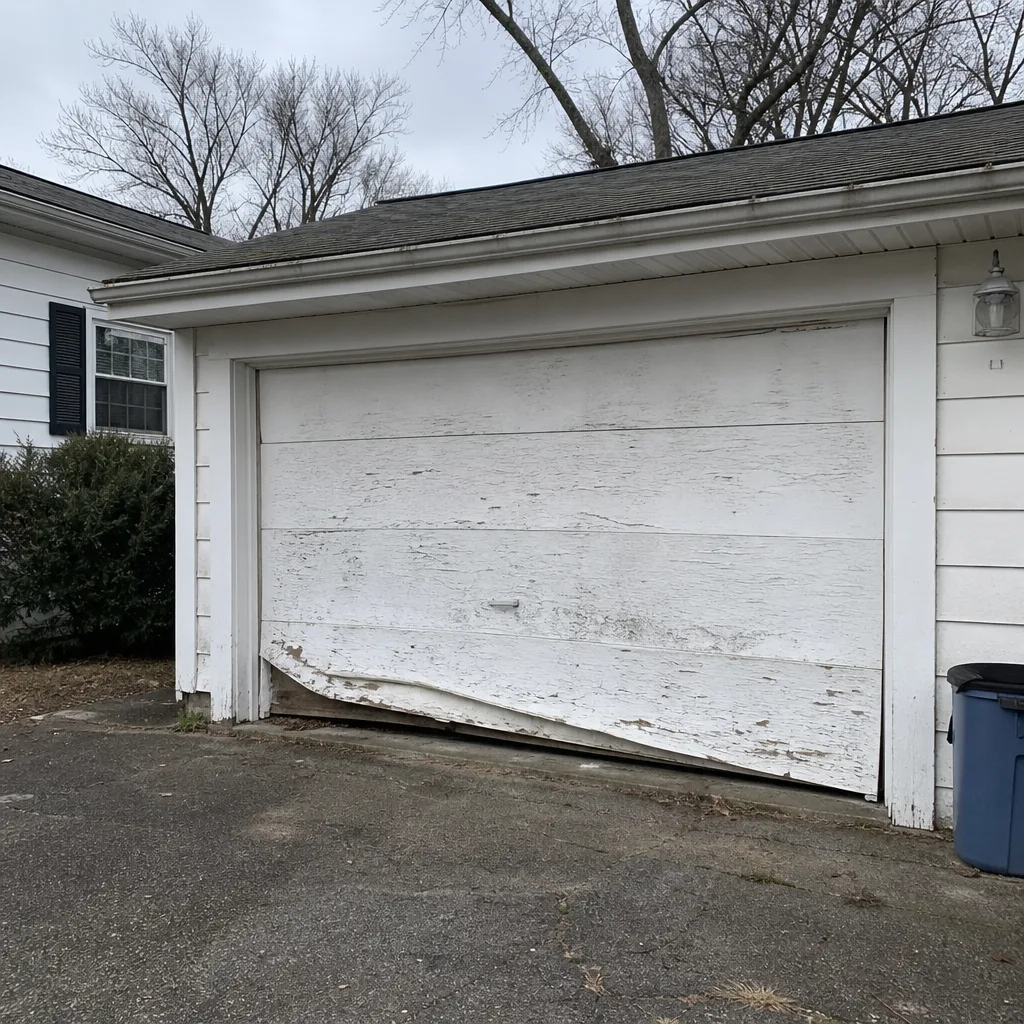 Before
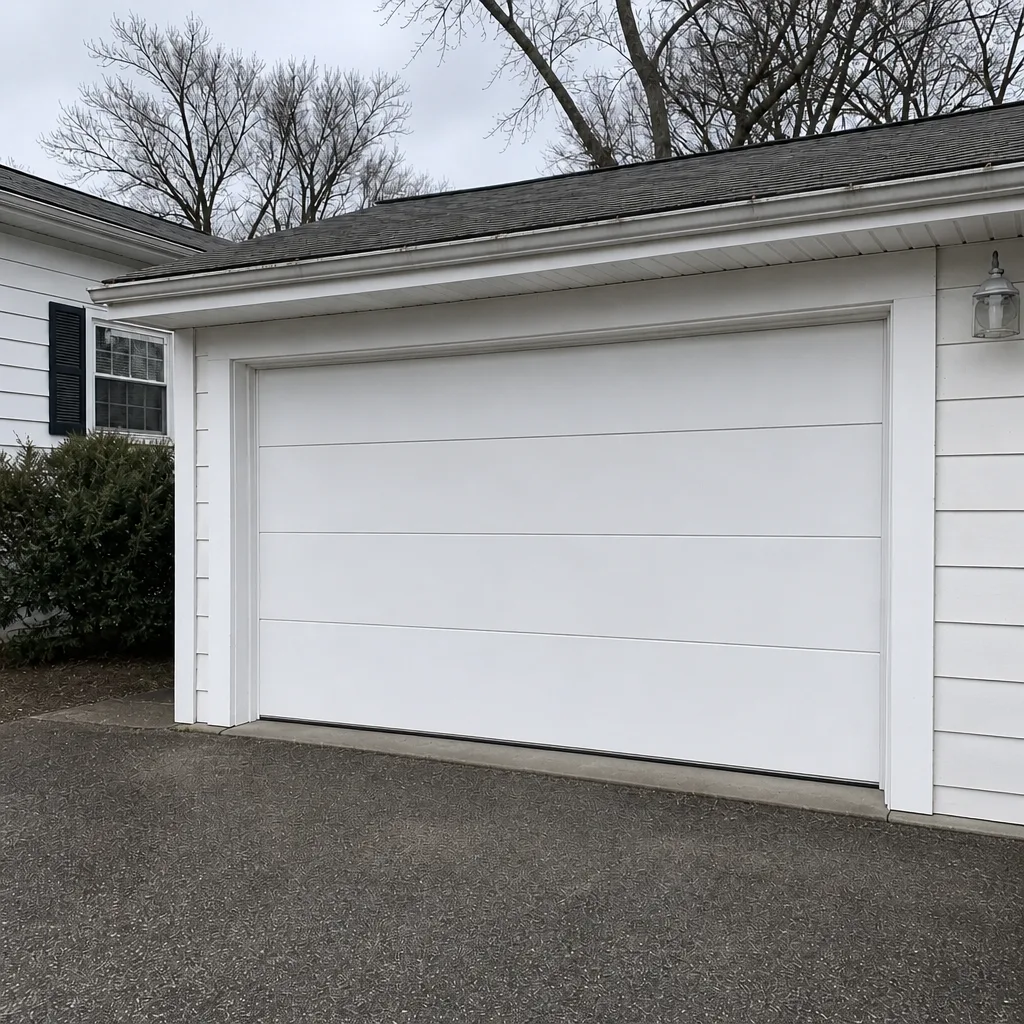 After
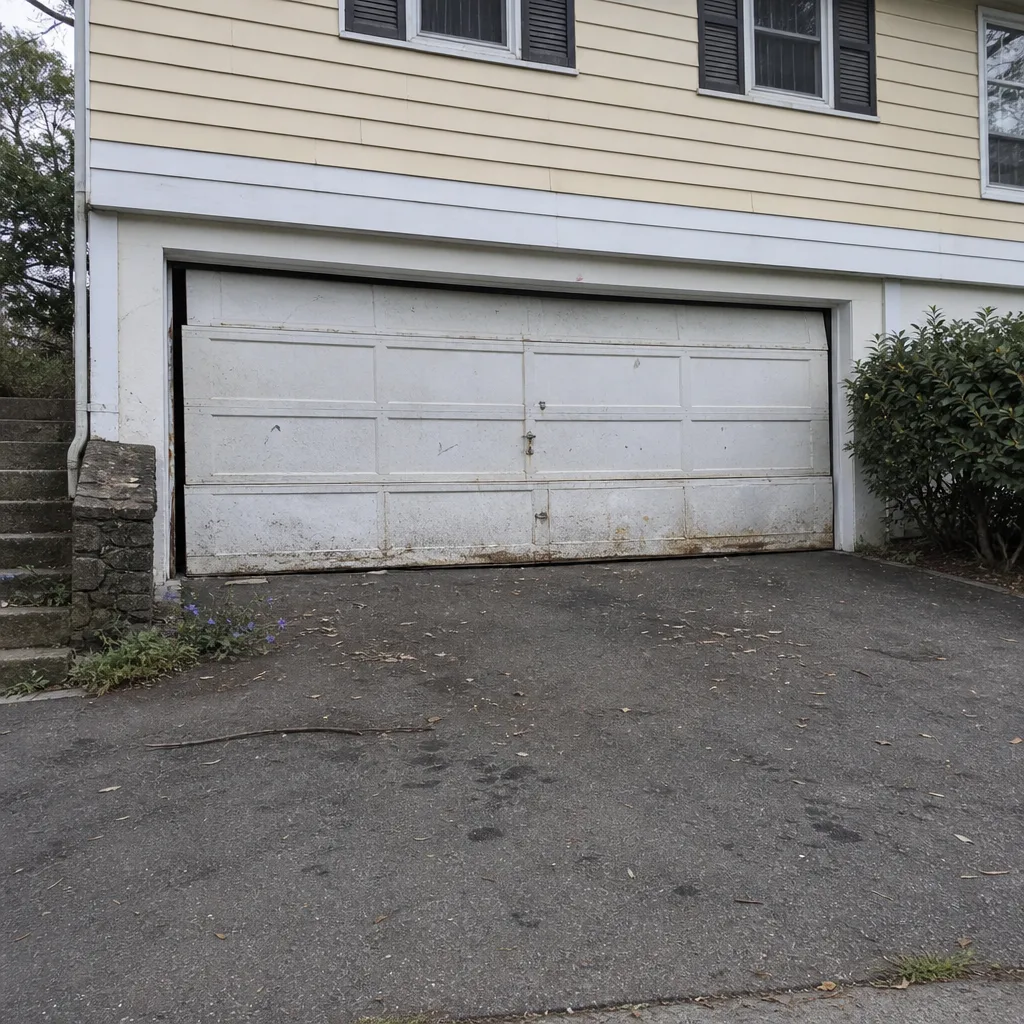 Before
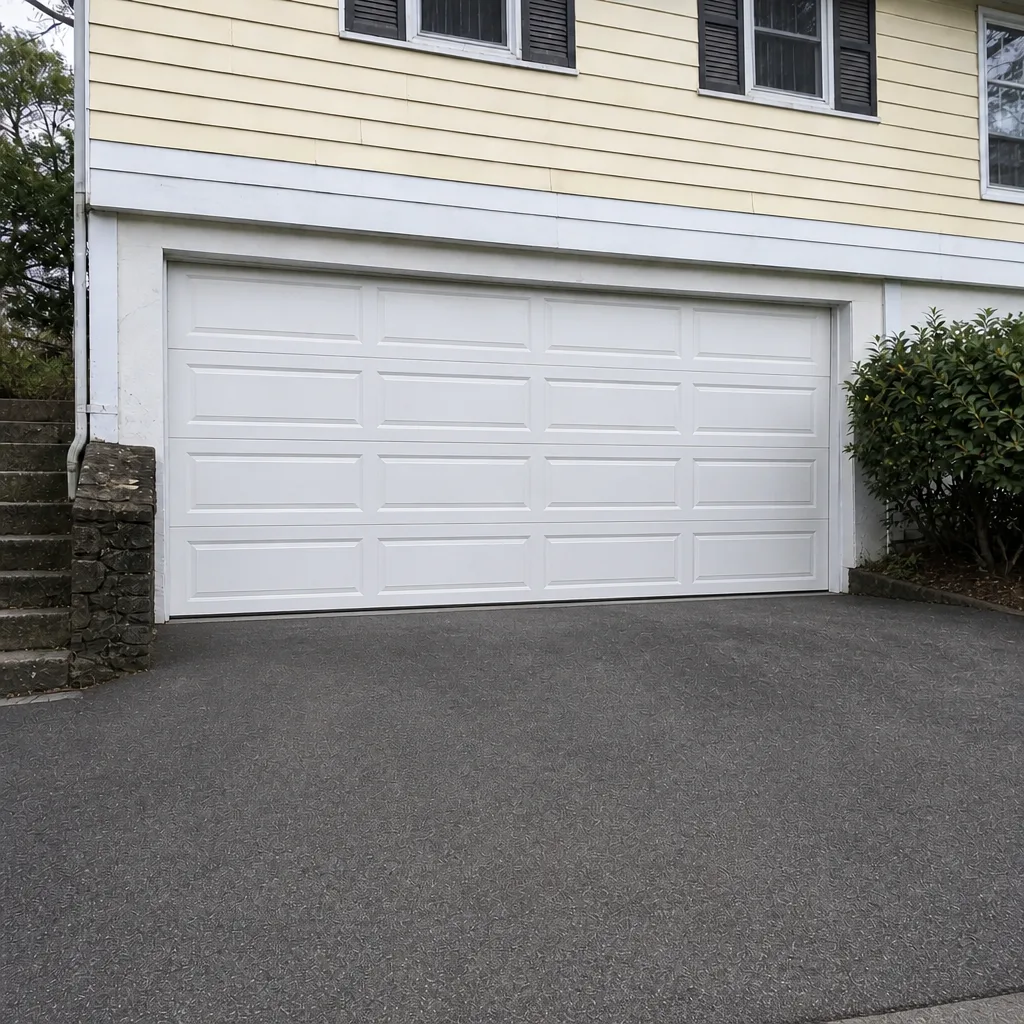 After
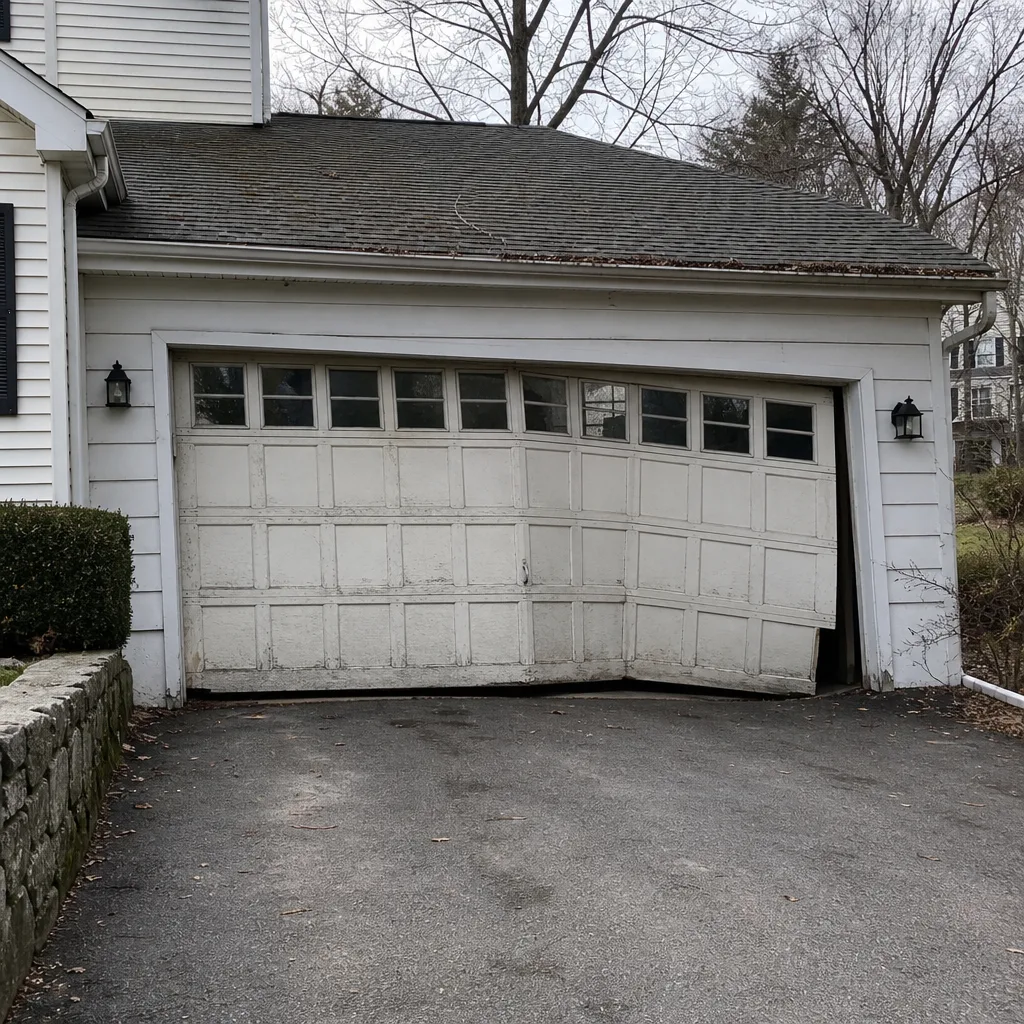 Before
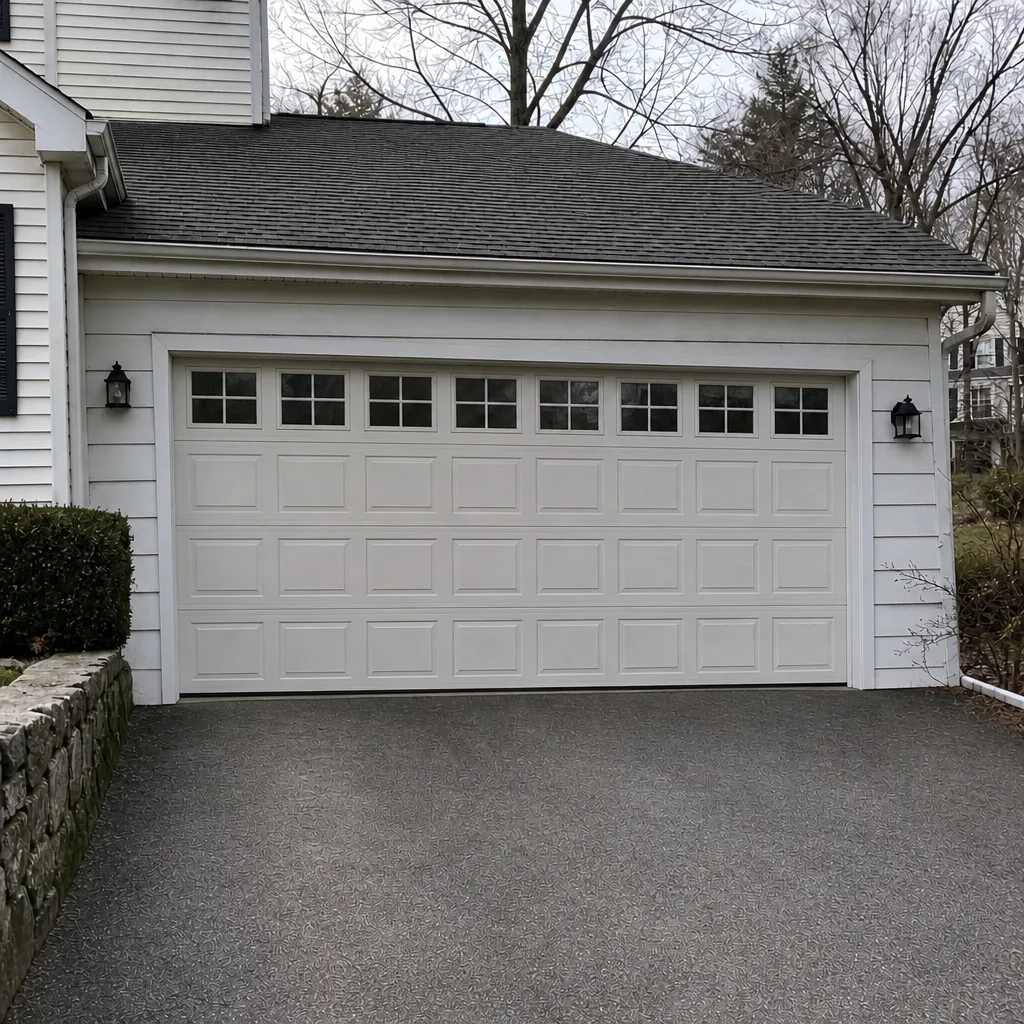 After
When to Call a Professional
Call a professional if you hear a loud pop from the springs or the door suddenly feels heavy, if you see a frayed cable or a visible gap in the lifting cables, if the door hangs unevenly or drops on its own during the balance test, or if your fault-code pattern doesn’t clear on a power cycle. Those are stop-using-it signals. Slower symptoms, like a grind on reversal, a rattle, a scrape or a door that’s just slow, are reasons to book rather than reasons to panic, but booking them early is what keeps them small. We don’t recommend hands-on spring, cable or track correction for any homeowner, even a confident one. Those parts carry energy and can hurt you when they let go. Greenwich Garage Door Repair offers free estimates in Greenwich. Call (866) 947-9299. We answer 24/7. Fast dispatch from 7am to 7pm, Sunday through Friday.
Frequently Asked Questions
A typical single-spring repair in Greenwich is usually in the lower to middle hundreds, and a matched pair, which is often replaced together, costs about double a single spring. The range keeps changing with parts and labor, so the written estimate sets the final price, and that estimate is quoted before any work starts. Call (866) 947-9299 for an exact quote. Estimates are free.
Yes, a door that won’t lift at all is a same-day priority. We answer 24/7, and we dispatch from 7am to 7pm, Sunday through Friday, closed Saturday. A call outside dispatch hours is booked into the next opening. Call (866) 947-9299 to book.
No. The written estimate sets the price before any work starts, so the number you agree to is the number you pay for the job as described. If a technician finds a second, related problem, they’ll quote that separately and you decide whether to go ahead. Call (866) 947-9299 for an exact quote. Estimates are free.
The local professionals we connect you with are licensed and insured as their state requires. Our technicians have up to 8 years of experience across the major brands, and they work on the door you already own. Call (866) 947-9299 to book.
No, and in most cases it isn’t. A grind on reversal usually means a roller has worn or slipped in the track, and the opener is fighting a crooked door. That’s why we inspect the door and track before recommending an opener replacement. Call (866) 947-9299 to book an inspection.
A broken spring is a hard stop: you hear a pop and the door suddenly feels heavy. An out-of-balance door still moves but fails to hold position during the balance test, and can still be used briefly if it’s safe. Both mean the opener is taking extra load, so both need professional attention. Call (866) 947-9299. Estimates are free.
The Bottom Line
Your garage door will usually tell you a failure is coming, if you know what to listen and look for. The four sounds (grind, scrape, pop, rattle) each point to a different component, and the 60-second gap test plus the balance test tell you whether the springs and cables are safe. A slow door is a warning, not a quirk. Opener fault codes are a lead, not a verdict. And when two or more symptoms appear at once, fixing only the loudest one usually costs you more than a full diagnostic. In Greenwich, we’d rather inspect a door and tell you it’s fine than replace a part you didn’t need. Call (866) 947-9299 for a free estimate.
Written by the team at Greenwich Garage Door Repair.