
Last updated November 24, 2026
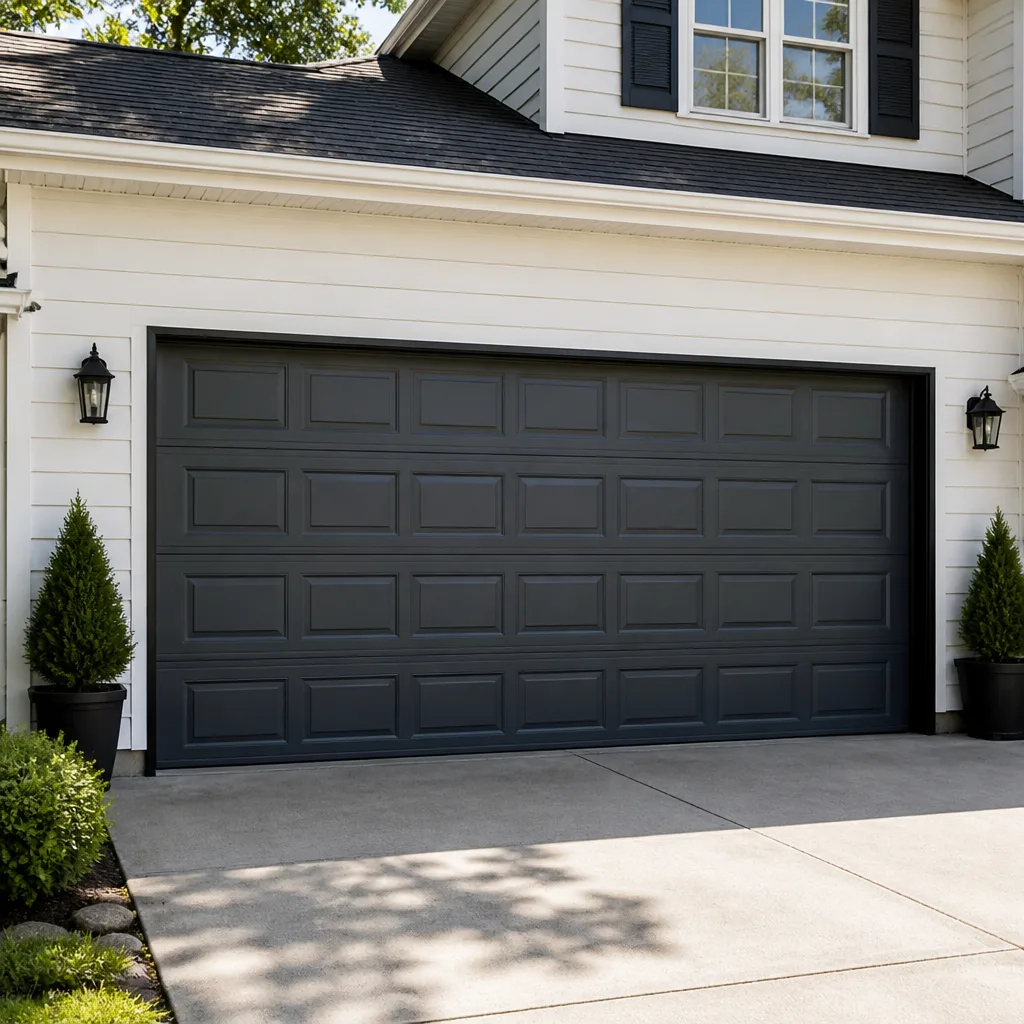 Raised-panel steel
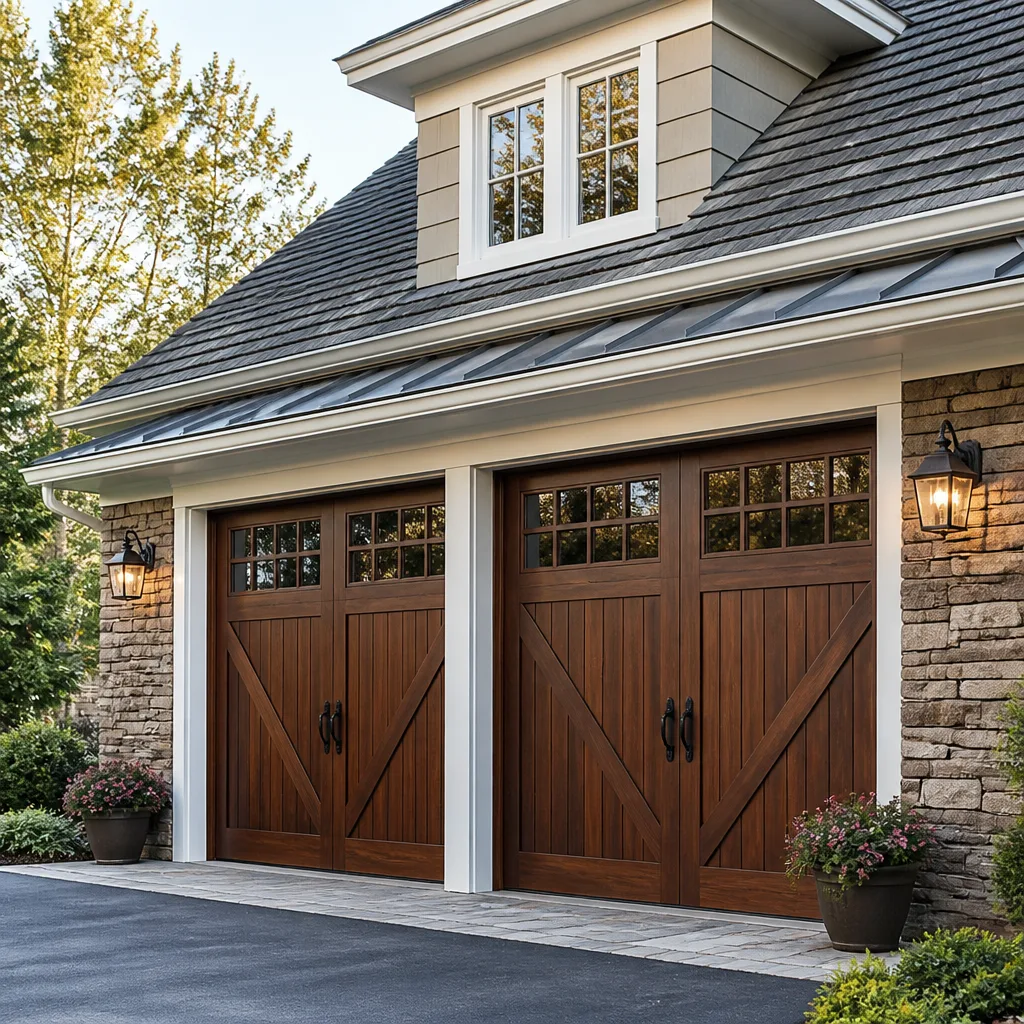 Carriage house
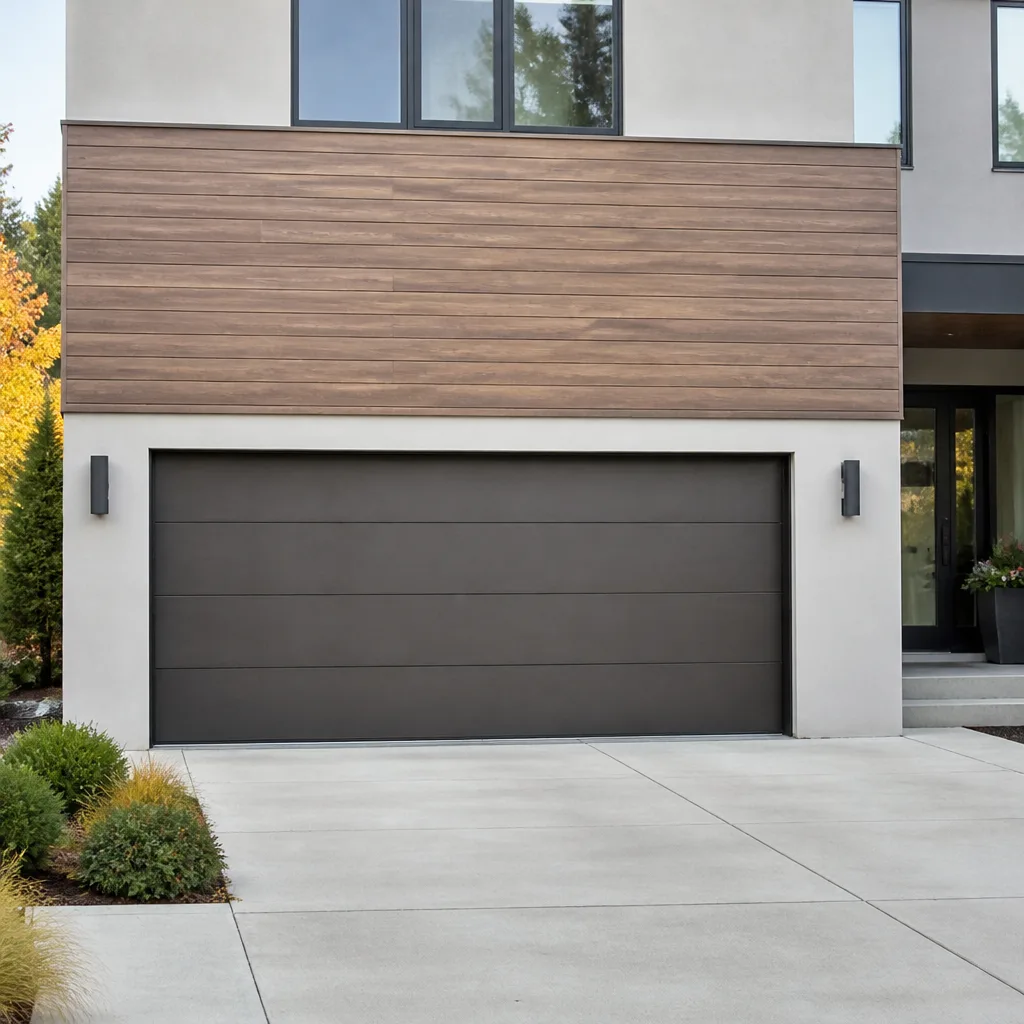 Modern flush
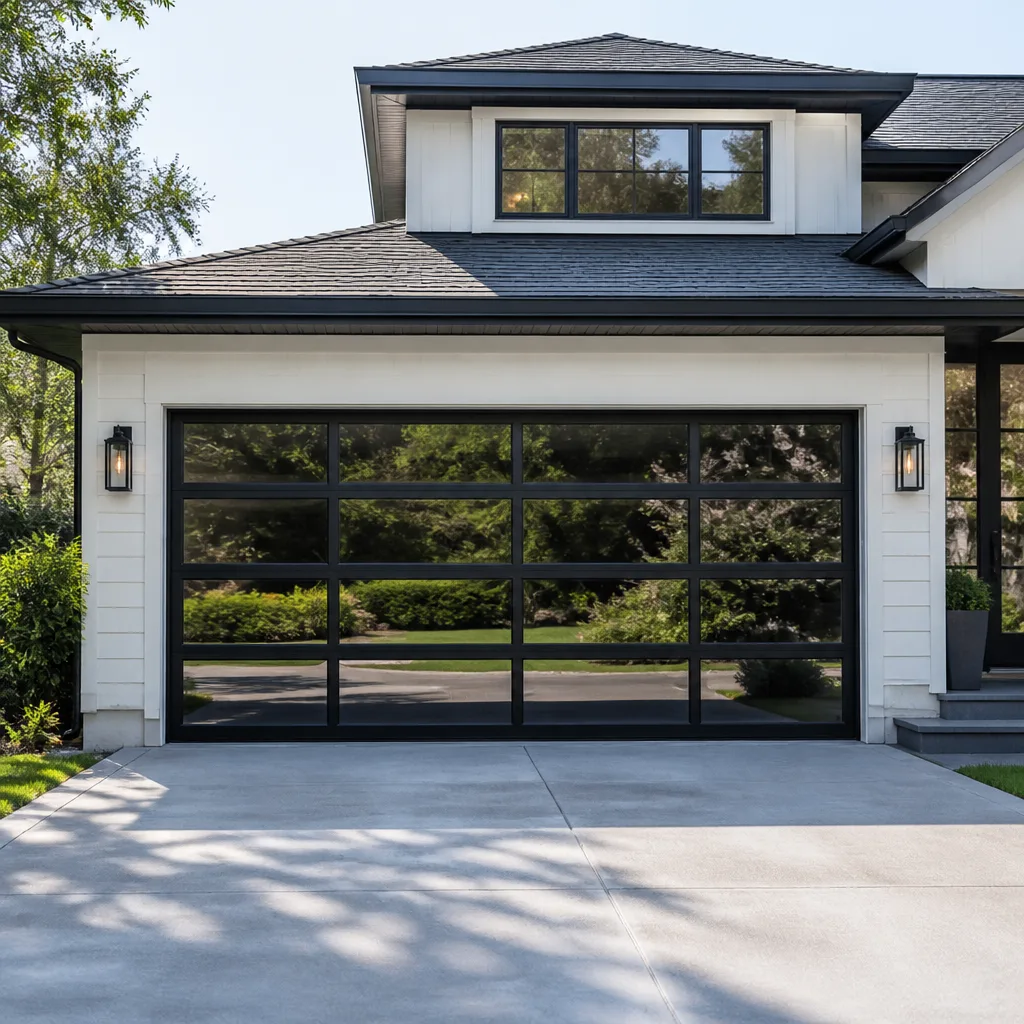 Full-view glass
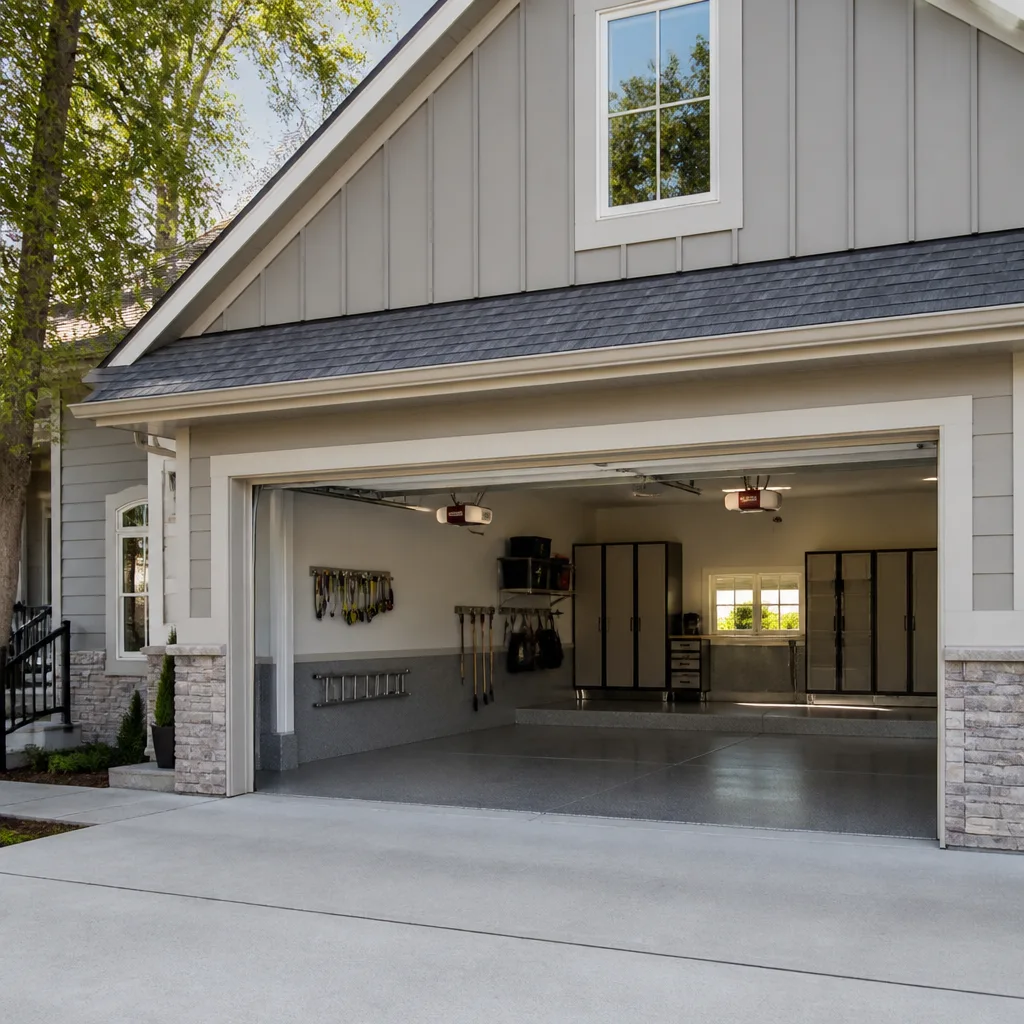 LiftMaster openers
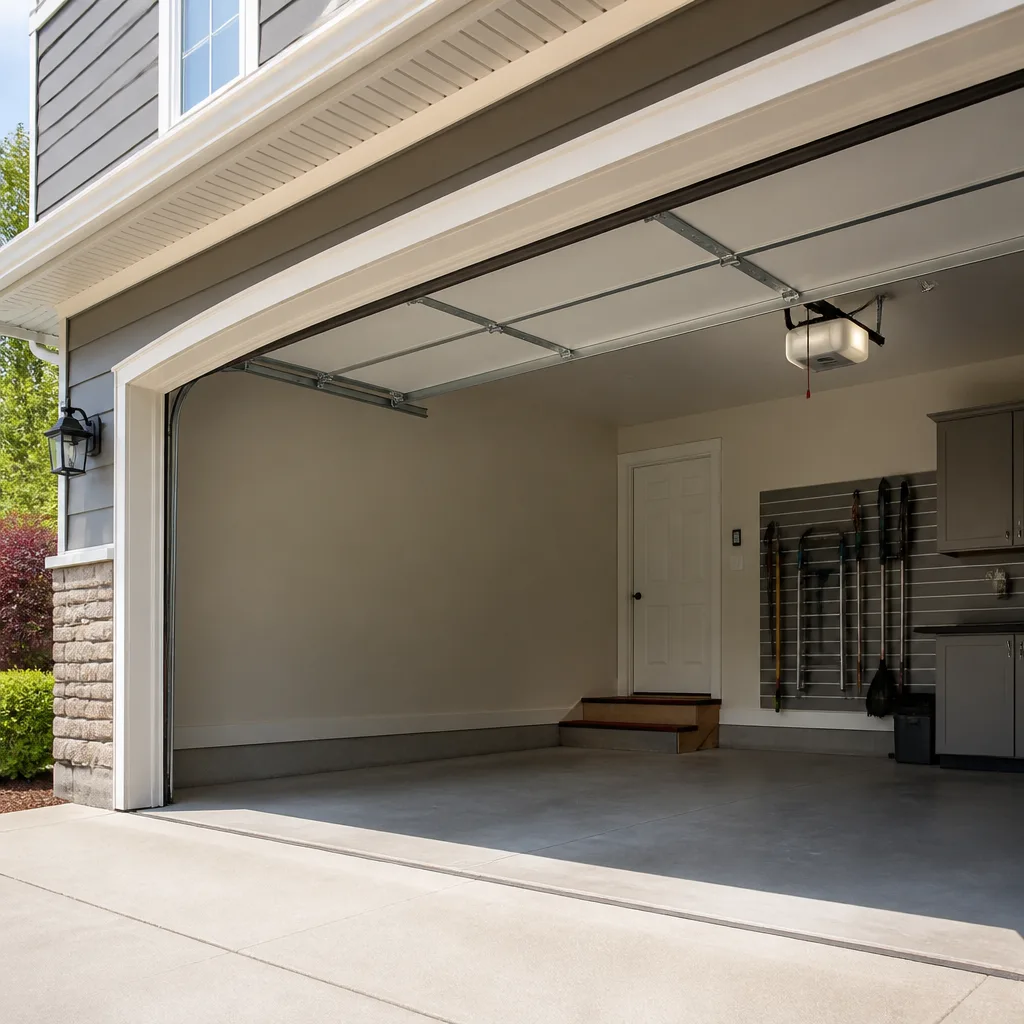 Chamberlain openers
Full 25-point door and opener safety check with every visit - springs, cables, rollers, tracks, and your LiftMaster or Chamberlain opener included
You get a price before we start. It does not change when the pro arrives.
Get your free estimateGarage Door Repair Maintenance Checklist for Greenwich Homeowners
Most people assume garage doors fail all at once. In our experience, they almost never do. The calls we get in Greenwich usually trace back to something that was visible months earlier: a spring that had lost tension and was working harder every week, a cable with a few frayed strands, a roller worn flat on one side. A quarterly walk-around that takes about fifteen minutes catches these before they become stranded-car problems. This guide is built around what we actually find on Greenwich doors, not a generic lubricate-and-inspect list. You’ll learn the specific tolerances to check, which lubricants belong where, and which findings mean stop using the door today.
Quick Answer
A garage door maintenance checklist for Greenwich homeowners should cover four systems every quarter: springs and cables for wear, rollers and hinges for smooth travel, the door’s balance and alignment, and the opener’s force and safety settings. Spend fifteen minutes on these four areas and you’ll catch most failures long before they leave you locked in or out. The parts that matter most here are the ones salt air, heavy carriage-style doors, and smart-home openers stress the hardest, and those are the ones a generic checklist skips.
Styles & brands we work with
- Raised-panel steel
- Carriage house
- Modern flush
- Full-view glass
- LiftMaster openers
- Chamberlain openers
Table of Contents
- Why Greenwich Doors Fail Differently
- Springs and Cables: The Fifteen-Minute Check
- Rollers, Hinges, and Track Alignment
- Which Lubricant Goes Where
- Opener Diagnostics for LiftMaster, Chamberlain, and Genie
- Corrosion Checks for Homes Near Long Island Sound
- The Balance Test and What It Tells You
- Stop Using the Door vs. Schedule It Next Week
Why Greenwich Doors Fail Differently
The maintenance checklist that works in a dry climate won’t cover everything a Greenwich door runs into. Three local patterns shape how these systems wear, and understanding them is what separates a useful checklist from a box-ticking exercise.
Heavy carriage-style doors. Many Greenwich homes, especially the older estates and the newer builds styled to match them, have carriage-house doors with decorative hardware, thicker panels, and heavier frames. That weight puts more demand on the torsion spring system. A spring sized correctly for a standard door will fatigue faster on a heavier one, and fatigue is gradual. The door doesn’t slam shut one day. It just gets harder for the opener to lift, and the spring winds tighter over months until it snaps.
Salt air and humidity. Properties within a couple of miles of Long Island Sound sit in air that carries moisture and salt. That combination goes to work on the steel parts: hinges, rollers, track, springs, and every fastener. You’ll see the first signs as a chalky white film or dark pitting, usually on the bottom hinges and the track near the floor where moisture collects.
Home automation and opener interference. Modern Greenwich homes often run whole-house automation: lighting, shades, security, and the garage door all on one platform. That’s convenient until a Wi-Fi router, a mesh node, or a security panel ends up too close to the opener’s receiver. The door starts responding intermittently or not at all, and the homeowner assumes the opener is dying when the problem is signal interference.
None of these are exotic problems. They’re just the ones that show up on Greenwich doors more than a checklist written for a national audience would expect. That’s the lens this guide uses.
Springs and Cables: The Fifteen-Minute Check
Springs and cables do the actual lifting. The opener only guides the door. When either one degrades, the whole system is under more stress, and that’s where most emergency calls begin.
What to look at, not touch. This is the part of the checklist where we ask you to look, not reach. Torsion springs are wound under extreme tension and extension springs store energy along the track. Neither is safe to adjust by hand, and a snapped spring can cause serious injury. What you can do safely is a visual inspection from the floor.
- Look at the spring coil. A healthy torsion spring is a smooth, even coil with no visible gaps. Rust streaks, a section that looks flattened, or a gap wider than a credit card between coils are all signs of fatigue or a partial break. If you see any of these, stop using the door and call for garage door spring repair.
- Check extension springs for separation. If your door uses springs that run parallel to the track, look at the safety cable running through the center of each. If it’s missing or the spring coils look stretched out of shape, that’s a red flag.
- Run a finger along each cable (with the door closed and the opener off). You’re checking for frayed strands, kinks, or a cable that has gone slack. A healthy cable is tight and smooth. Any fraying at the drum or the bottom bracket means the cable is on its way out.
- Look at the bottom brackets and the drum. Corrosion, cracks, or a drum that’s shifted out of line all point to wear on the lifting hardware.
You’re looking for anything that’s changed since the last check. A spring that looked smooth three months ago and now has a visible gap is telling you something.
Rollers, Hinges, and Track Alignment
The door travels on rollers that ride inside the track. When rollers wear flat or the track bends out of line, the door starts to bind, and binding puts extra load on the opener and springs. This section catches those problems early.
Rollers. A healthy steel roller has a round, smooth wheel. A worn one has a flat spot on one side, and the door will thump or hesitate as that flat spot rolls through the curve of the track. Nylon rollers wear differently: they don’t flatten so much as develop cracks or chatter. If the roller looks worn out of round or the bearing is dry and rattling, it needs replacing. Rollers are one of the cheapest parts to replace and one of the most common causes of a noisy, jerky door.
Hinges. Hinges connect the panels and carry the door through the curve of the track. Look for loose screws, metal that’s worn thin at the pivot, or a hinge that’s bent. On Greenwich doors, hinges are often where corrosion shows first, especially the bottom hinge closest to the floor where moisture settles. A hinge that’s seized won’t pivot, and the panel it holds will pull out of alignment.
Track alignment. The track should be straight and evenly spaced on both sides. A track that’s been bumped by a car bumper, or one side that’s drifted, will bind the rollers and make the door hard to lift. Stand back and sight down each track like you’re aiming a rifle. If it’s kinked or the gaps between the rail and the door edge are uneven, that’s a professional fix, not a household adjustment.
None of this takes long. Walk the door with the opener disconnected, run your hands along the track, watch the rollers as the door moves. You’ll spot the wear in a minute or two.
Which Lubricant Goes Where
This is where most maintenance guides go wrong, and where a lot of Greenwich doors get quietly damaged. The right lubricant in the right place extends the life of the door. The wrong one makes the problem worse.
Do not use WD-40 on springs or any load-bearing steel part. We see this constantly. WD-40 is a solvent with a light oil blended in. It displaces moisture and loosens stuck parts, but it evaporates quickly and leaves behind almost no protection. On a torsion spring or a cable drum, it removes the original grease and leaves bare steel. The spring then corrodes faster, not slower. When we find WD-40 on a spring, it’s a technician’s red flag that the door may have been mistreated, and we check the rest of the hardware carefully.
Here’s what goes where:
- Springs and cables: a lithium grease or a dedicated garage door spring lubricant. These stay put under pressure and protect against moisture.
- Hinges and roller bearings: a spray lithium grease or a silicone-based garage door lubricant. You want it to penetrate the pivot and stay.
- Roller wheels (the nylon or steel wheel itself): clean them, but don’t grease the wheel surface that runs in the track. Grease on the track attracts grit and makes the door dirtier.
- Track: clean with a damp rag, don’t lubricate. The track should be dry and clean.
- Weather seal: a silicone spray makes the bottom seal more flexible and helps it seal against the floor.
One more thing: apply lubricant sparingly. A light coat on a clean surface goes farther than a thick layer, and too much grease collects grit that wears parts faster. Most doors only need lubrication twice a year.
Opener Diagnostics for LiftMaster, Chamberlain, and Genie
The opener is the brains of the system, and most of the diagnostic work is in two settings: force and travel limits. If those drift, the opener works harder than it should and the door suffers. Here’s what to check for the brands we see most in Greenwich homes.
LiftMaster. LiftMaster openers have LED indicators and a control panel that shows error codes. A steady status light usually means the photo-eye is blocked or misaligned. A blinking code points to a specific fault. The manual for your model decodes it, and the garage door opener repair page covers the most common patterns. Check that the photo-eye on each side of the door has a clean lens and that the two lights are facing each other squarely.
Chamberlain. Chamberlain and LiftMaster share a lot of design, so the diagnostics are similar. The main difference is how the travel limits display. If the door stops short or reverses at the top, the travel limit is the first place to look. A sensor that’s out of alignment is the most common cause of a door that won’t close.
Genie. Genie openers have their own fault codes, often shown as a number of blinks on the motor head. They’re also known for a safety reverse that’s sensitive to the door’s balance. If a Genie opener reverses immediately on close, check that the door moves freely by hand first. If it doesn’t, the problem is the door, not the opener.
For all three, the force setting is the one that gets quietly pushed higher over the years to compensate for a binding door. That’s the wrong fix. If the door needs more force to close than it used to, the door is the problem, and forcing the opener to overcome it wears the opener out faster. A properly balanced door needs very little force.
Corrosion Checks for Homes Near Long Island Sound
Properties within a couple of miles of Long Island Sound sit in air that carries a steady dose of moisture and salt. You can’t see it in the air, but it leaves a mark on metal. The steel parts of your garage door are exposed to it every day, and the damage is quiet until it isn’t.
Here’s where to look:
- Bottom hinges and the bottom bracket. Lowest point, closest to the floor, and where moisture collects first. Look for white chalky powder (that’s oxidized zinc) or dark pitting.
- The track near the floor. Check the inside face for rust streaks or a rough texture. A track that’s rusting will wear rollers faster.
- Fasteners and bolts. Loose or rusted bolts are a sign corrosion is working on the door’s structural connections.
- Springs and cable ends. The ends of a spring and the cable drum are where corrosion starts on a lifting system.
- Steel door panels. Look at the bottom edge and any cutouts for bubbling paint or rust bleeding out of a seam. Once corrosion starts on a steel door, it spreads if it isn’t caught.
If you’re within sight of the water, treat corrosion checks as a monthly habit, not a quarterly one. A quick wipe-down of the bottom hinge and bracket with a dry rag, a light coat of lithium grease on the pivot points, and a look at the track will add years to the parts. If you’ve got a steel door and it’s showing rust at the seams, our garage door repair team can tell you whether the panel can be repaired or needs replacing.
The Balance Test and What It Tells You
The balance test is the single most useful thing a homeowner can do. It tells you, in under a minute, whether the springs are carrying their share of the load or whether the opener is doing work it shouldn’t. A balanced door needs almost no force to move, and it stays where you leave it.
- Disconnect the opener. Pull the release cord so the door runs on its springs and cables alone.
- Lift the door about halfway by hand. A balanced door should stay in place when you let go, roughly at waist height.
- Open it fully and let go. It should sit at the top without drifting down.
- Lower it to the floor. It should close smoothly and not speed up or drop in the last few inches.
If the door wants to ride up, drifts down, or falls shut on its own, the springs aren’t balanced. That’s a sign of fatigue, a mismatched spring, or a broken spring on one side of a two-spring system. Don’t try to fix it by adjusting the springs yourself, and don’t just raise the opener’s force setting to compensate. A balance issue is exactly what garage door spring repair is for.
The balance test also tells you something about the opener. If the door balances easily but the opener still strains to lift it, the problem is in the opener’s force setting or its gear and rail, not the springs. That diagnostic split is the fastest way to know whether you’re looking at a door problem or an opener problem.
Stop Using the Door vs. Schedule It Next Week
Not every finding on this checklist is urgent. Some are. Knowing the difference keeps you from making a small problem dangerous and keeps you from paying for an emergency visit you didn’t need. Here’s how we sort it.
Stop using the door today, and call for same-day service:
- A spring that’s visibly broken, or a gap between coils wider than a credit card.
- A cable that’s frayed, slack, or hanging off its drum.
- The door is off its track or visibly crooked when it moves.
- The door falls or slams rather than lowering under control.
- A bottom bracket or hinge that’s cracked or pulled loose.
Any of these means the door’s lifting system is compromised, and using it risks injury or damage to the door and opener. Disconnect the opener, leave the door closed, and call. Our garage door repair team handles these as same-day calls.
Schedule it for later in the week or month:
- Rollers that are worn or noisy but the door still moves smoothly.
- A door that’s noisy but balances and opens normally.
- Cosmetic rust or paint bubbling that hasn’t reached the structural seams.
- An opener that’s a little slow or inconsistent but the door itself balances.
- Weather seal that’s hardened or cracked but the door still closes flush.
The dividing line is simple. If a component that carries the door’s weight is compromised, stop. If it’s cosmetic, wear, or something the opener can handle safely, you can plan the repair. When you’re not sure, the balance test tells you where you stand.
Common Mistakes to Avoid
- Using WD-40 on springs and cables. It strips the existing grease and leaves bare steel, so the parts corrode faster. Use a lithium or dedicated garage door lubricant instead, and save the WD-40 for loosening rusted bolts.
- Raising the opener’s force setting to fix a binding door. This is the most common wrong fix we see in Greenwich. The door should need very little force. Increasing the force hides the problem and wears the opener’s gears out faster.
- Adjusting springs yourself. Torsion springs are wound under extreme tension and can cause serious injury. A visual check from the floor is safe, but any adjustment should be done by a trained technician.
- Ignoring corrosion because it’s “just cosmetic.” On the bottom hinge and bracket, corrosion is a wear indicator that affects structural connections. Let it go and the hinge fails while the door is loaded.
- Assuming a slow or intermittent opener is dying. In Greenwich homes with home automation, a mesh node or router near the opener often causes interference that looks like opener failure. Check the signal before replacing the opener.
- Skipping the balance test because it takes time. It takes under a minute and catches the most expensive problem on this list. A door that no longer balances is on its way to a spring or cable failure.
- Forgetting the weather seal. A hardened seal lets moisture and debris in and puts uneven pressure on the door. It’s a cheap part that protects expensive ones.
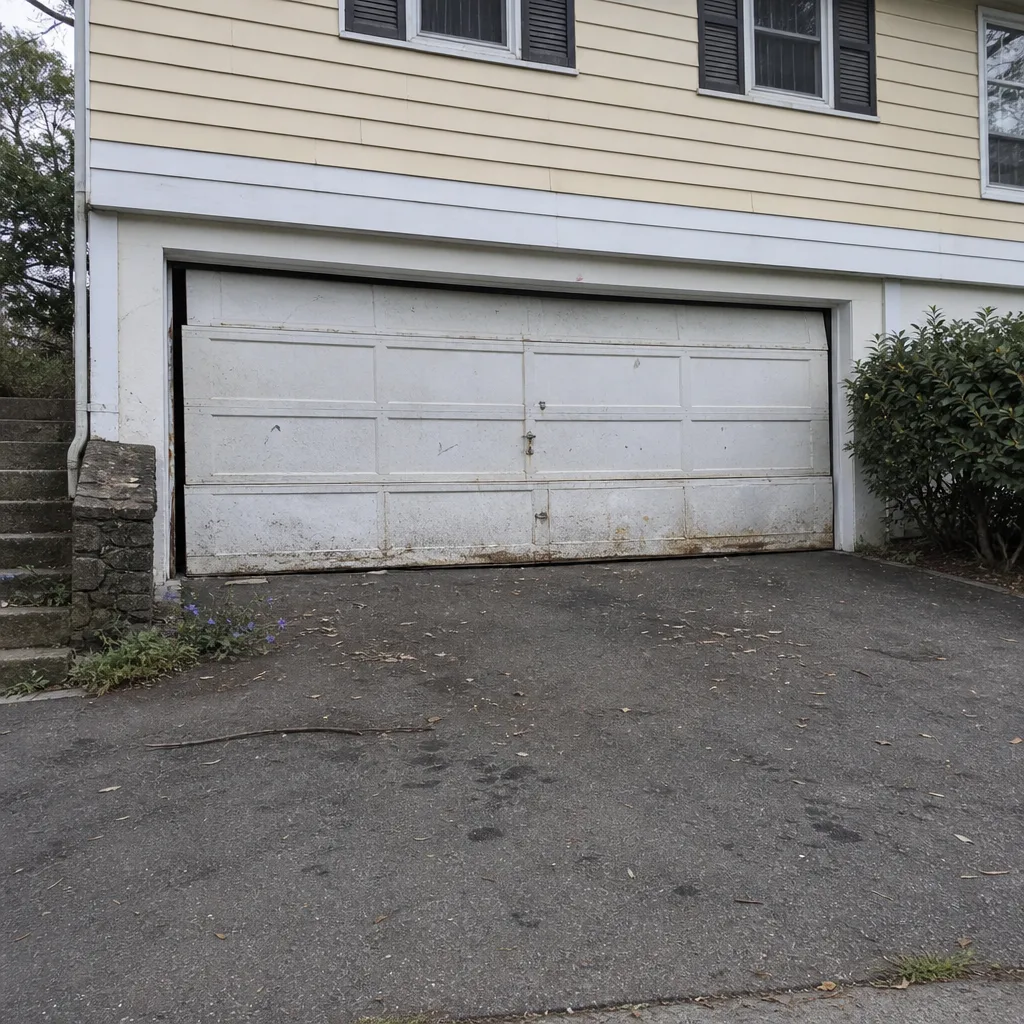
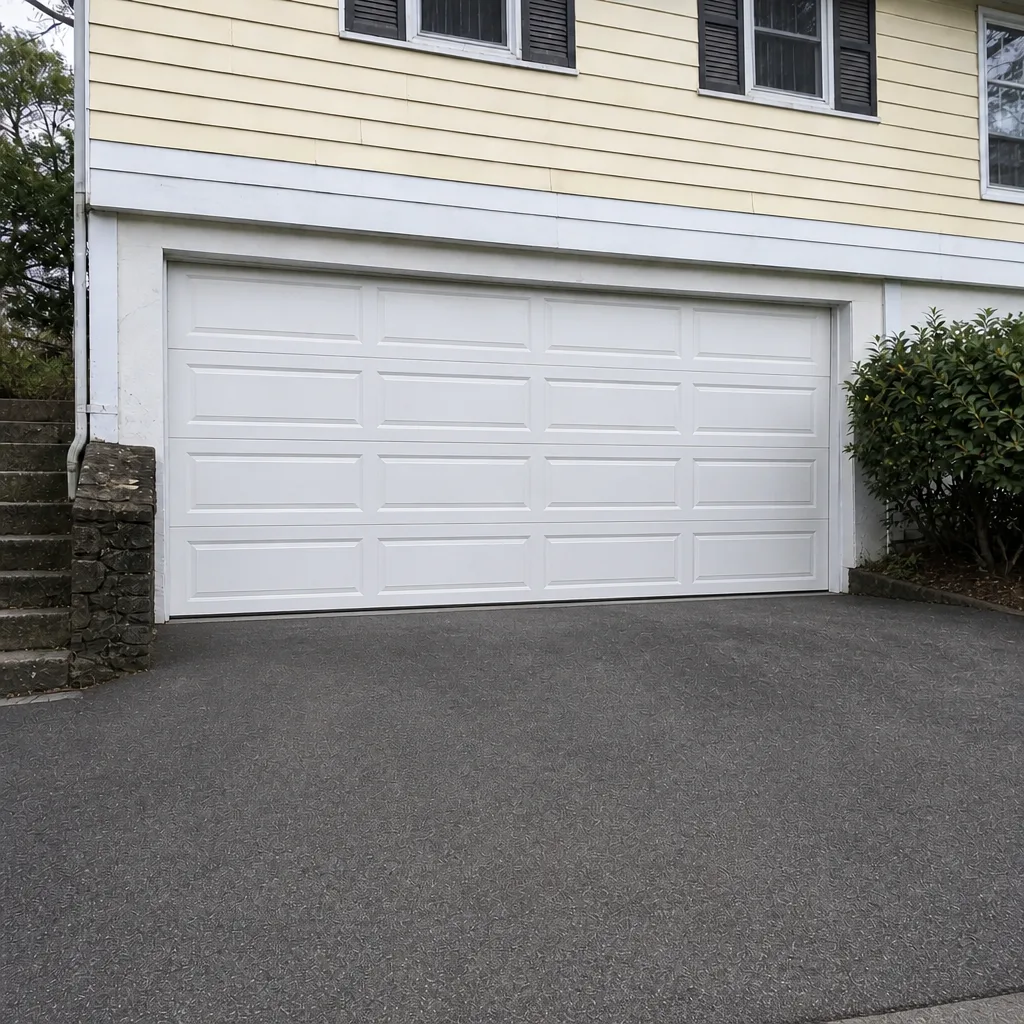
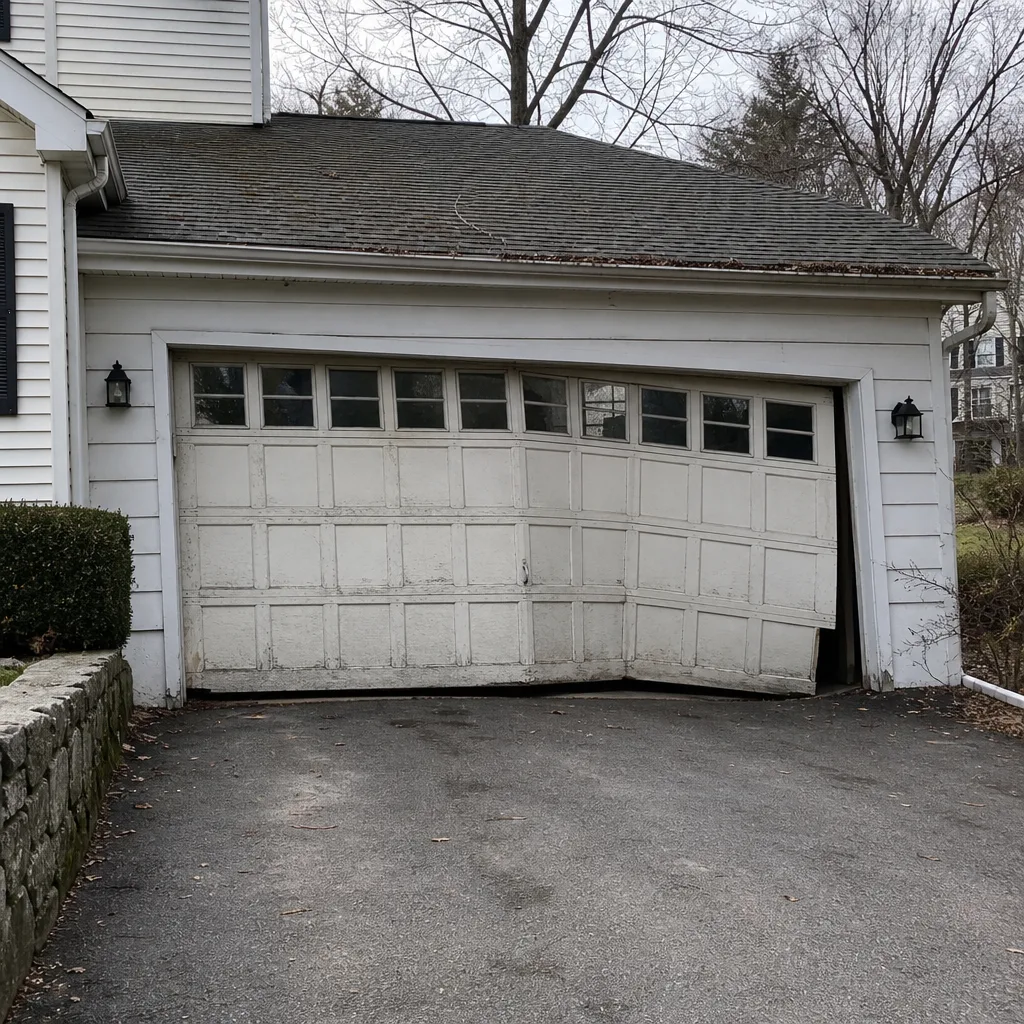
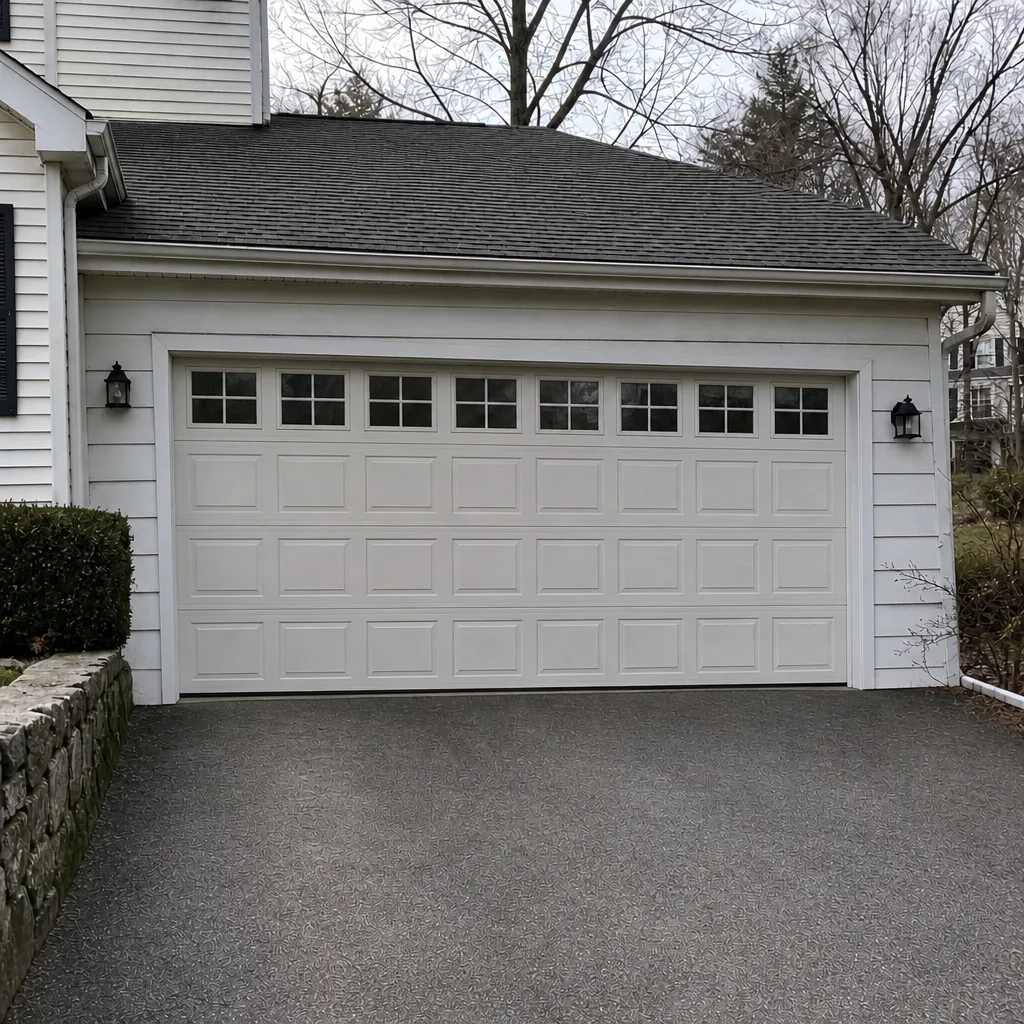
See the difference
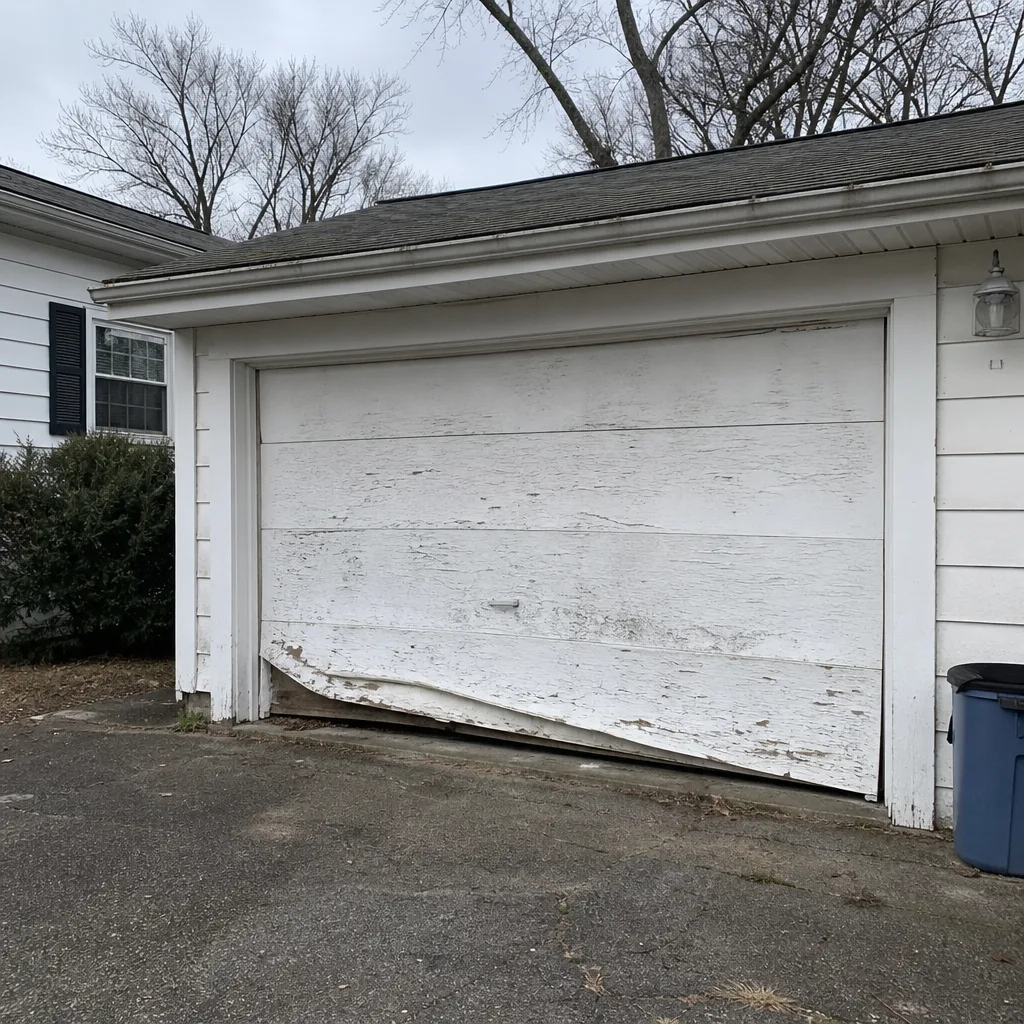 Before
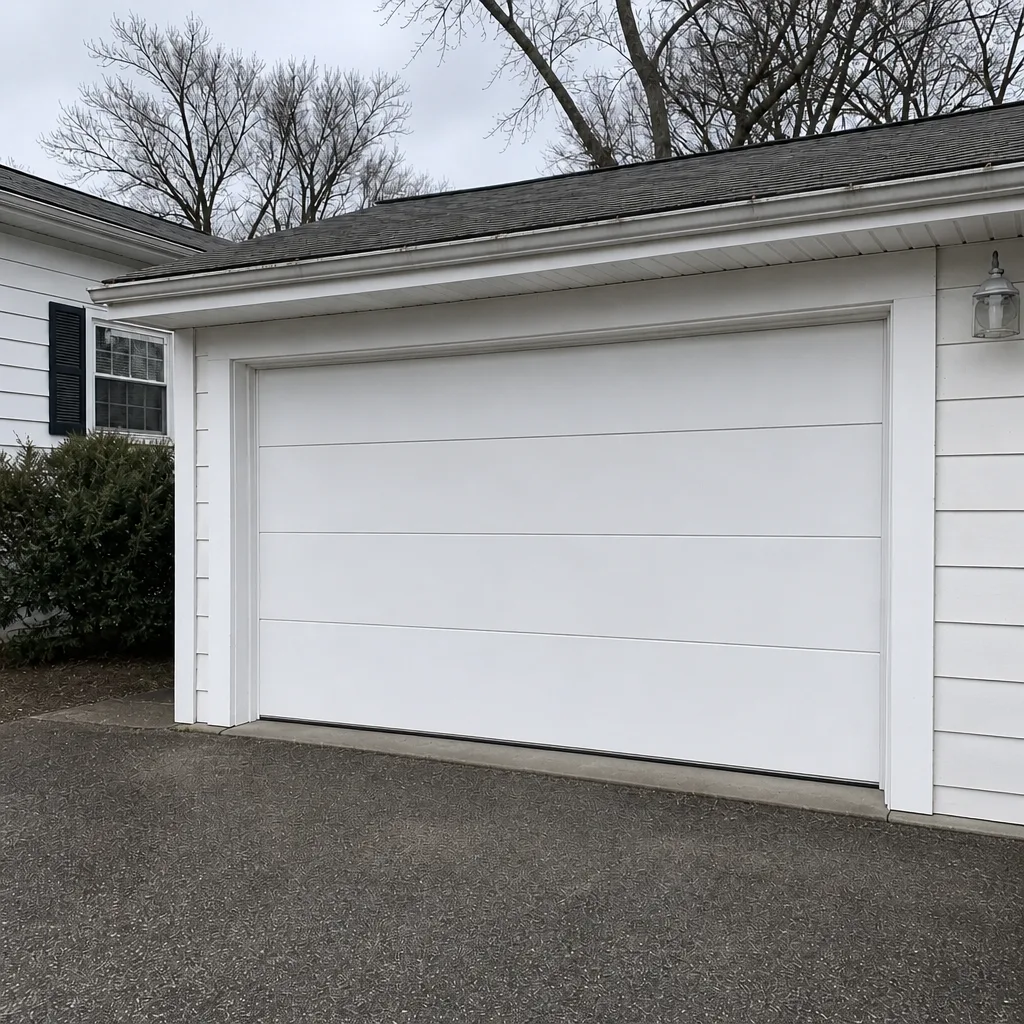 After
 Before
 After
 Before
 After
When to Call a Professional
Call a professional when the checklist turns up anything that affects the door’s lifting system: springs, cables, brackets, track alignment, or balance. These parts store energy, and a DIY adjustment can cause serious injury. Call for garage door repair today. We can work on brands from LiftMaster and Chamberlain to Genie, Clopay, Amarr, Wayne Dalton, and Raynor, so the technician already knows the system on your door. Our technicians have up to 8 years of experience, and the price is quoted and agreed before any work starts. Greenwich Garage Door Repair offers free estimates in Greenwich. Call (866) 947-9299. We answer 24/7. Fast dispatch from 7am to 7pm, Sunday through Friday.
Frequently Asked Questions
Every quarter is the right rhythm for most Greenwich homes, and monthly for the corrosion checks if you’re within a couple of miles of Long Island Sound. The fifteen-minute walk-around catches most wear before it becomes a failure, and the balance test at the end of each check is the fastest way to know whether the springs are still doing their job.
You can apply a light coat of lithium or dedicated garage door lubricant to the visible spring coil from the floor, with the door closed and the opener off. You should not attempt any adjustment, disassembly, or work that puts the spring under tension. If the spring looks worn, has gaps, or the door won’t balance, call for garage door spring repair rather than touching it. Call (866) 947-9299 for an exact quote. Estimates are free.
A door that opens smoothly and struggles to close usually has a spring that’s lost tension on one side, a binding roller, or a track that’s drifted. Run the balance test: if the door won’t stay at halfway, the springs are the likely cause. If it balances fine, look at the rollers and track. Either way, the opener’s force setting is not the fix.
Yes, and it’s one of the local patterns we see on Greenwich doors. Moisture and salt carry on the air well inland, and the bottom hinge, ground-level track, and bottom bracket are where it shows first. A chalky white film or dark pitting on those parts means corrosion is active. Wipe and re-grease the pivots, and have a technician look at any structural rust.
Interference and a failing opener can look identical: the door responds inconsistently or not at all. The split is simple. If the wall control button works every time but the remote or app doesn’t, the problem is signal interference, not the opener. Move any router, mesh node, or security panel away from the opener head, then test. If the wall button also fails, the opener needs service. Our garage door opener repair team can sort out which one you have.
Replace the door when the structural panels, bottom section, or steel seams have rusted through, or when repairs on the lifting hardware are more than the door is worth. If the panels are sound and only the springs, rollers, and opener need work, repair makes sense. For a full replacement, we install new doors from brands like Clopay and Amarr, and the crew measures, orders, and schedules the installation around your written estimate. For anything on the repair side, call (866) 947-9299. Estimates are free.
The Bottom Line
The reason most Greenwich garage door failures catch homeowners by surprise is that the warning signs were there for months. A spring that’s losing tension doesn’t announce itself. A cable with a few frayed strands still lifts the door. This checklist is built to catch those signals early, using the local patterns that matter here: heavy carriage-style doors that stress the springs, salt air that attacks the hardware, and smart-home setups that interfere with the opener. Run the balance test quarterly. Look at the spring coil, the cable, the bottom hinge, and the track. Know which findings mean stop using the door and which can wait. Fifteen minutes now saves an emergency call later.
Contact Us
If the checklist turns up something you’d rather have a technician look at, we can take it from there. We work on LiftMaster, Chamberlain, Genie, Clopay, Amarr, Wayne Dalton, Craftsman, and Raynor equipment, and we handle everything from a single spring to a full door replacement. Call (866) 947-9299 for a free estimate. We answer 24/7. Fast dispatch from 7am to 7pm, Sunday through Friday. The price is quoted and agreed before any work starts.
Written by the team at Greenwich Garage Door Repair.