
Last updated November 24, 2026
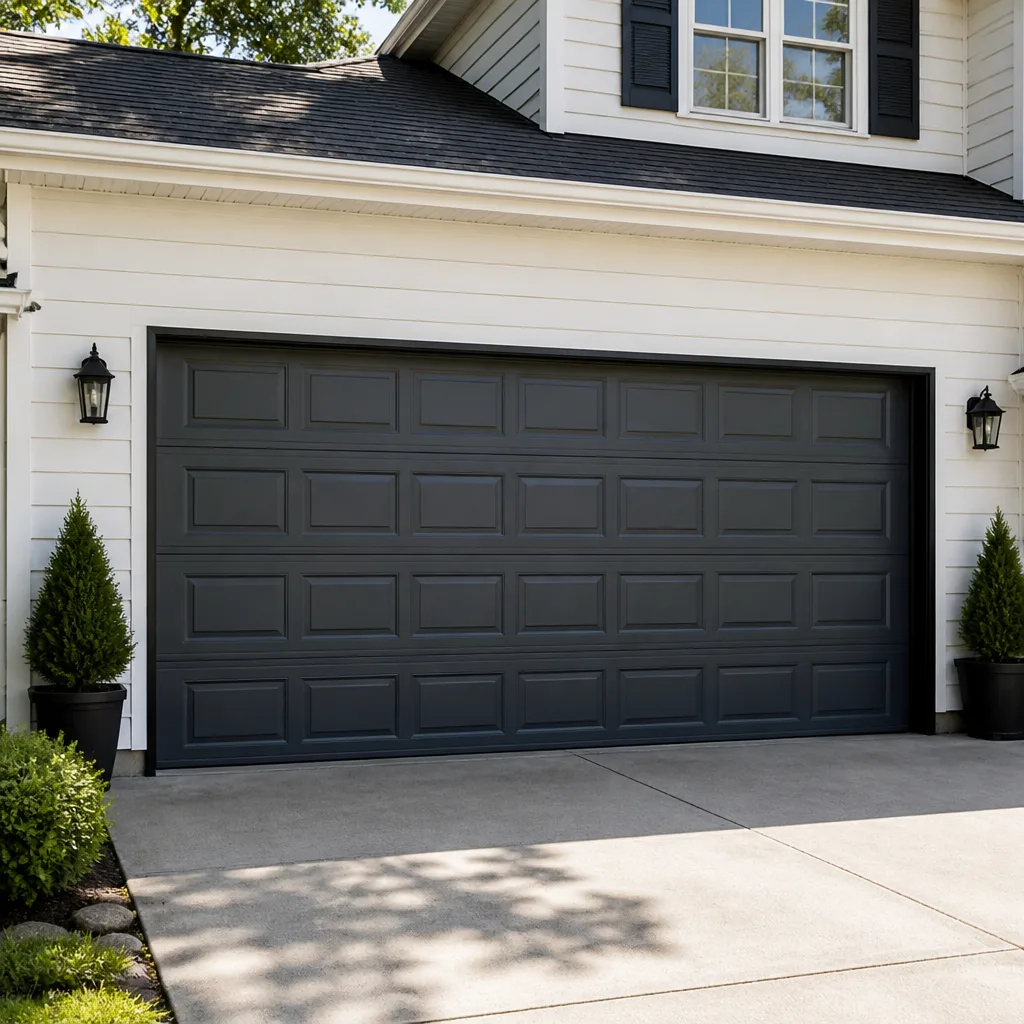 Raised-panel steel
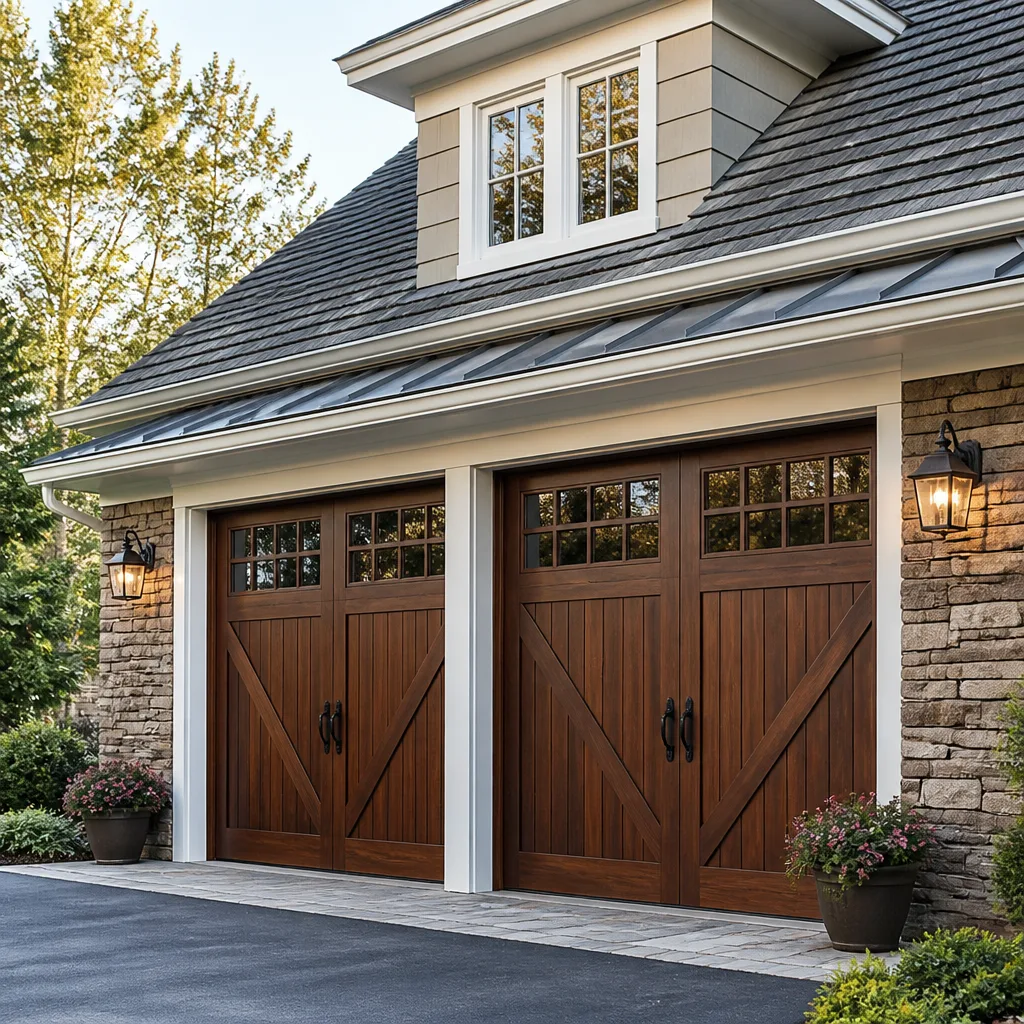 Carriage house
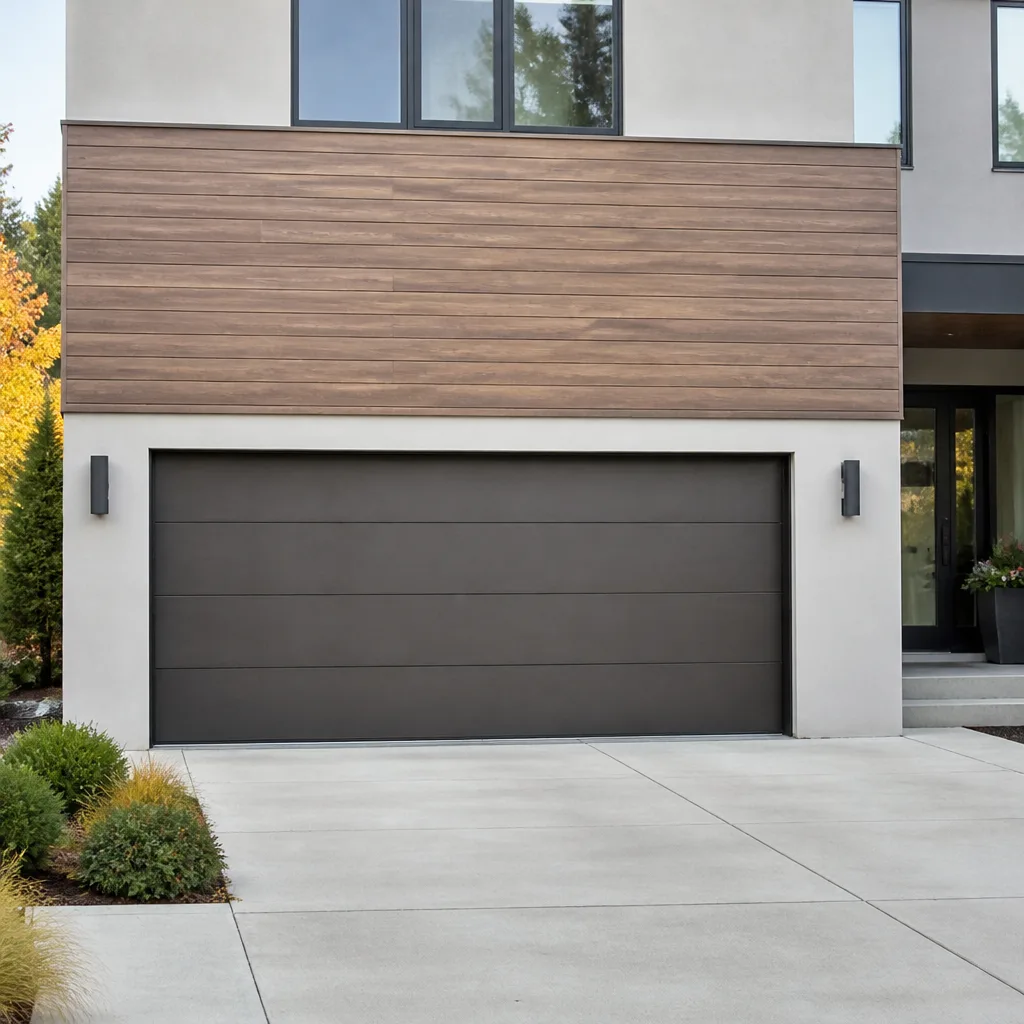 Modern flush
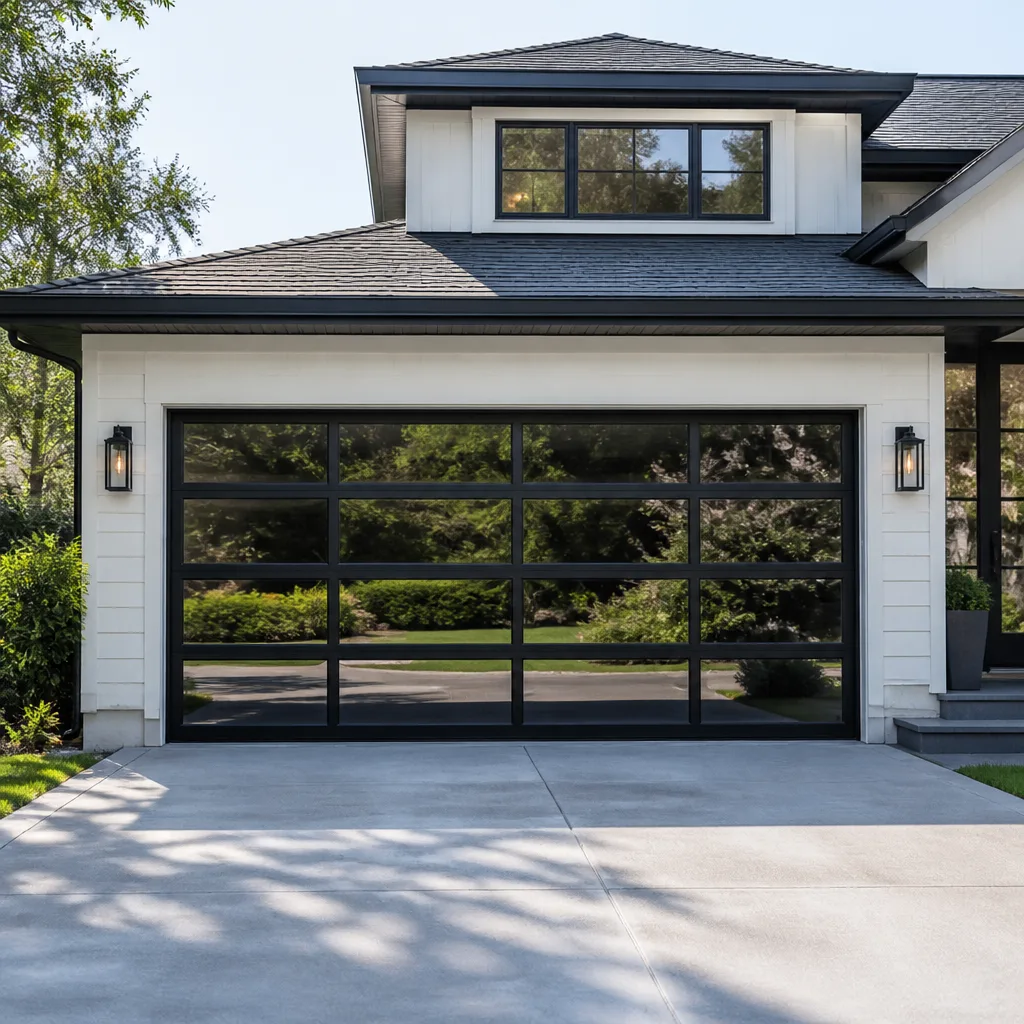 Full-view glass
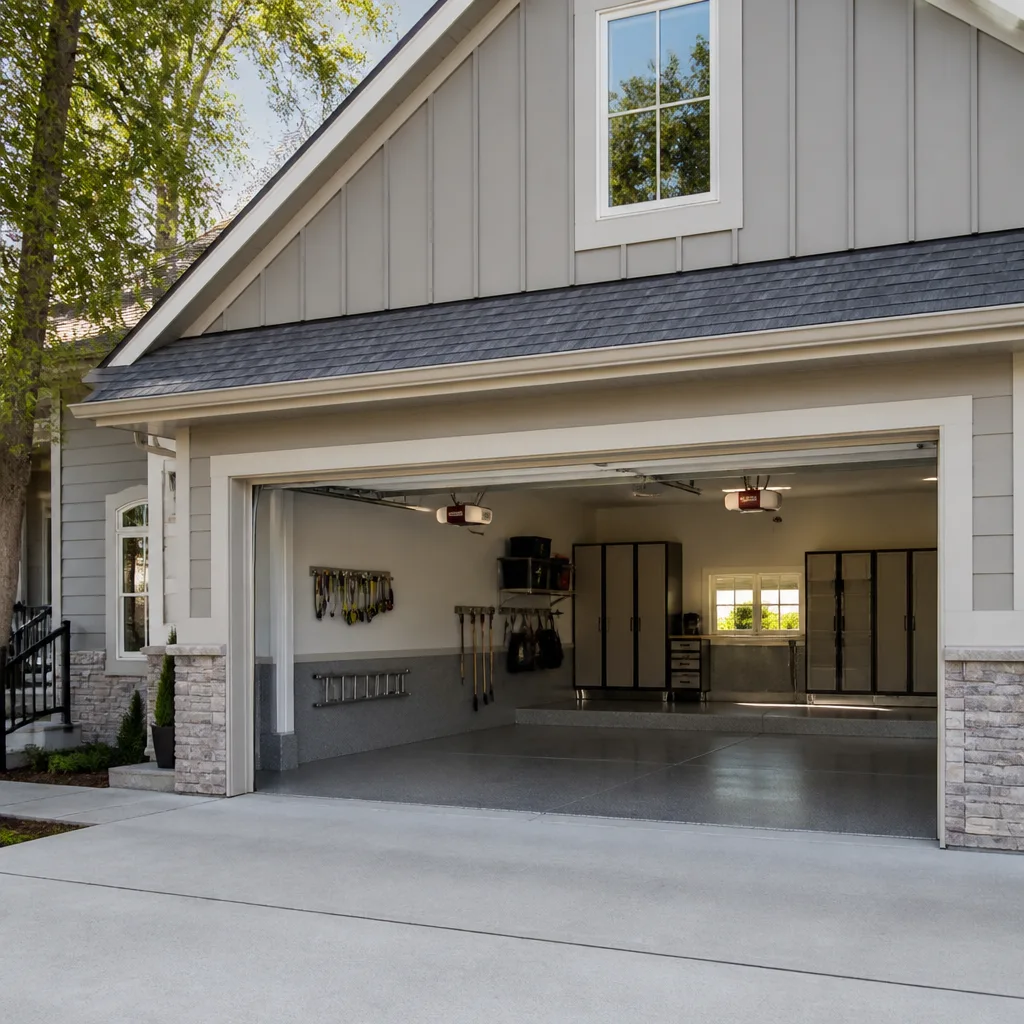 LiftMaster openers
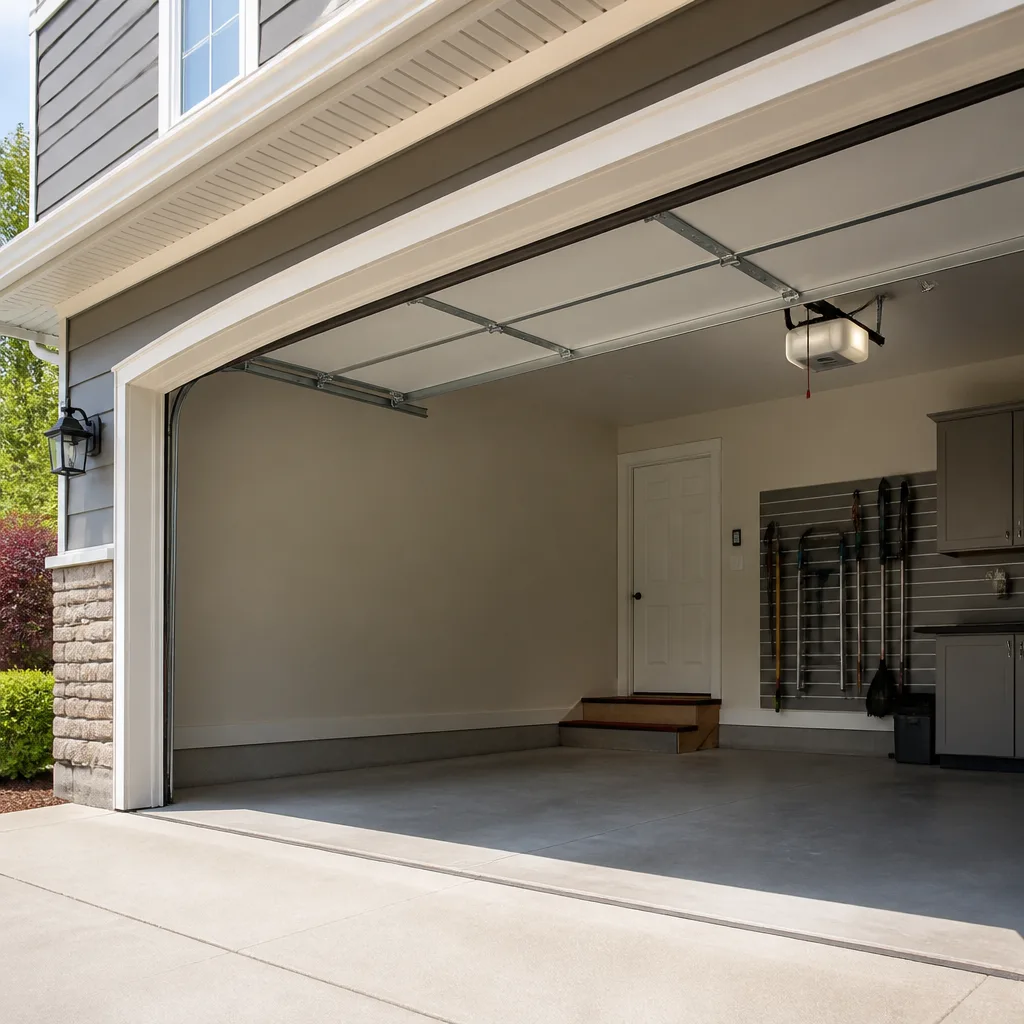 Chamberlain openers
Full 25-point door and opener safety check with every visit - springs, cables, rollers, tracks, and your LiftMaster or Chamberlain opener included
You get a price before we start. It does not change when the pro arrives.
Get your free estimateGarage Door Cost Breakdown: The Greenwich Homeowner’s Reference for 2026
Most garage door cost guides are built on national averages, and those averages are quietly wrong for Greenwich. A calculator that says a new door install should run around $850 is pulling from ZIP codes in Ohio, not from Fairfield County labor rates, local permit costs, and the heavier hardware coastal Connecticut homes actually need. The real floor here sits closer to $1,400. That gap matters when you’re deciding between a repair and a replacement, or trying to read a contractor’s quote without a reference point. This guide breaks the job into line items – panels, springs, cables, opener, tracks, labor, permit, disposal – each with a Greenwich-specific range, plus the questions that move your quote up or down.
Quick Answer
Garage door work in Greenwich in 2026 typically runs $180 to $340 for a single spring replacement, $250 to $550 for an opener repair or replacement, and $1,400 to $4,800 for a full door installation depending on material, size, and hardware tier. Carriage-style wood and steel overlay doors sit at the top of that range, and a small but real share of Greenwich quotes includes a city permit and old-door disposal. Every price is set per job by a written estimate before work begins.
Styles & brands we work with
- Raised-panel steel
- Carriage house
- Modern flush
- Full-view glass
- LiftMaster openers
- Chamberlain openers
Table of Contents
- Line-Item Cost Breakdown for Greenwich
- Why Carriage-Style Doors Cost More in Greenwich
- Opener Cost Tiers: Belt, Jackshaft, and Wall-Mount
- Repair vs. Replace: When the Calculation Tips
- Questions That Change Your Quote
- Door Material Costs in the Greenwich Market
- Permits and Old-Door Disposal
- Common Mistakes to Avoid
Line-Item Cost Breakdown for Greenwich
A garage door isn’t one purchase; it’s eight or nine. When you see a single lump-sum number on a quote, that number is bundling components with very different price floors. Breaking them apart is how you spot an inflated line and know what you’re actually paying for.
Here’s how the pieces stack up for a typical single-car residential door in Greenwich in 2026. These are estimated ranges, and the written estimate is the price that holds.
| Component | Typical Greenwich Range | Notes |
|---|---|---|
| Door panels (single-car, steel) | $650 – $1,600 | Insulated panels push toward the top |
| Door panels (double-car, steel) | $1,100 – $2,800 | Size and gauge of steel matter |
| Torsion spring (one) | $180 – $340 | Matched pair runs about double |
| Cables and drums (pair) | $140 – $280 | Often replaced with springs |
| Opener (unit only) | $220 – $600 | By drive type and features |
| Tracks and hardware | $180 – $450 | Low-headroom setups run higher |
| Installation labor | $350 – $900 | Varies with door size and complexity |
| Permit (where required) | $75 – $250 | Confirm with Greenwich’s building department |
| Old-door disposal | $75 – $200 | Hauling and recycling fees |
Add those up for a mid-grade double-car install and you land in the $2,800 to $3,800 range, which is why the headline “$850” number from national calculators is misleading. Our technicians have up to 8 years of experience pricing these jobs, and the biggest line that gets underestimated in Greenwich is labor – not because it’s inflated, but because local rates reflect the cost of doing business in Fairfield County.
Why Carriage-Style Doors Cost More in Greenwich
Carriage-style doors – the ones with wood overlays, decorative hardware, and window inserts that mimic old barn doors – are common on Greenwich homes, especially in the older neighborhoods around central Greenwich and the backcountry properties. They typically cost $2,200 to $5,500 for a double-car configuration, which is well above a standard steel door of the same size.
What drives that premium is rarely just aesthetics:
- Material weight. Wood overlay panels are heavier, which means heavier-gauge torsion springs and more robust hardware. That spring cost is baked into the installed price.
- Custom sizing. Carriage doors often require non-standard rough openings, so panels can’t be pulled off a shelf – they’re built to fit.
- Weather exposure. Greenwich sees real seasonal swings between humid summers and freezing winters, and that stresses wood and composite overlay panels more than plain steel. Proper sealing and a heavier frame spec are part of the job, not optional add-ons.
- Finish and trim. Overlay doors usually need trim work and finishing that a flush steel door doesn’t.
The aesthetic payoff is real – a carriage door can change the whole front of a house – but budget for the fact that you’re buying a heavier system, not just a prettier face. Brands like Clopay and Amarr make carriage-style steel-overlay doors that hold up well in the local climate and cost less than a full wood option while keeping the look.
Opener Cost Tiers: Belt, Jackshaft, and Wall-Mount
The opener is where Greenwich homes with finished garages and low headroom often need a different answer than the standard chain-drive unit. Three tiers dominate the local market:
- Belt-drive. The quietest mainstream choice, good for garages below a bedroom or living space. Unit pricing typically runs $280 to $550 installed. LiftMaster and Chamberlain are the brands we see most often in this tier.
- Jackshaft. Mounts on the side wall, ideal for garages with low headroom or a high-clearance door. Costs typically $450 to $800 installed because the mounting is more involved.
- Wall-mount. Sits beside the door rather than on the ceiling, popular in finished garages where ceiling space is at a premium or where the ceiling is already finished. Runs $400 to $750 installed.
Smart-home integration – the ability to open or monitor the door from a phone – adds roughly $50 to $150 to any tier, and most current LiftMaster, Chamberlain, and Genie units support it out of the box. If you’re keeping an older opener alive, a garage door opener repair is often the cheaper call than a full replacement, and it’s worth having a technician diagnose before you commit to a new unit.
One thing to plan for: if the garage ceiling is finished or the door is a low-headroom setup, the opener choice is constrained, and picking the wrong tier means paying to redo the mounting. That’s a quote-changing question, and it’s covered further down.
Repair vs. Replace: When the Calculation Tips
There’s no single dollar threshold that decides it, but three factors tip the math toward replacement in most Greenwich cases:
- Door age. A door past roughly 15 to 20 years old is usually on borrowed time for springs, cables, and panel integrity. If two or more of those fail within a year, replacement starts to make more sense than repeated repairs.
- Parts availability. Older doors from discontinued lines make panel and hardware sourcing harder, and the repair cost climbs because parts are custom-fabricated or hunted down. When a door can’t be matched, replacement is often the only clean path.
- Total repair cost threshold. When the combined cost of repairs approaches 50% or more of a new door’s installed price, the money is better spent on a new system with a fresh warranty. A $700 repair on a door that would cost $1,500 to replace rarely pencils out.
The other factor unique to older Greenwich homes is panel damage from seasonal weather. A single dented or cracked panel on a discontinued profile can be hard to source, and that pushes a door that would have been a repair candidate into replacement territory. For a spring failure on its own, a dedicated garage door spring repair is the clear call – replacing springs is far cheaper than replacing a door, and it’s one of the most safety-critical repairs on the whole system.
If you’re on the fence, the honest test is simple: add up what you’d spend on repairs over the next two years and compare it to a new door’s installed price. If the repair total crosses half the replacement cost, lean toward the new door.
Questions That Change Your Quote
Two quotes for the same door can differ by hundreds of dollars because of factors that aren’t visible in a headline price. These are the questions worth asking before you sign anything:
- What insulation R-value do I need? An insulated door costs $200 to $600 more than an uninsulated one. For a garage attached to living space or below a bedroom, the insulation is worth it; for a detached, unheated garage, it’s often money you don’t need to spend.
- Is my rough opening standard? A non-standard opening means custom panels and more labor, adding $150 to $400 to the job. It’s a common issue in older Greenwich homes.
- Do I want smart-home integration? Adds $50 to $150, and it’s cheaper to spec it into a new opener than to add a module later.
- Which warranty tier applies? A standard warranty covers the mechanism for a fixed period; an extended warranty adds cost but covers more. Ask what’s covered, not just how long.
- Are permit and disposal included? These are the two line items most often left off a quote and added later. Ask up front so the estimate is the real number.
Get all five answered in writing. A reputable contractor will put the answer on the estimate, and the price you agree to is the price you pay. That’s the standard our team holds to on every garage door repair and installation we’re connected with.
Door Material Costs in the Greenwich Market
Material choice is the biggest single lever on your total cost. Here’s how the options stack in the local market:
- Steel (single or double car). $650 to $2,800 for the panels. The most common choice, durable, and the easiest to source panels for. Clopay steel doors are widely installed locally.
- Composite and steel overlay. $1,200 to $3,500. Looks like wood but handles humidity better. A good middle ground between plain steel and full carriage wood.
- Carriage-style wood overlay. $2,200 to $5,500. The premium option, justified on older homes and high-curb-appeal properties.
- Aluminum and glass (modern). $2,500 to $6,500. Popular on contemporary renovations but less common on traditional Greenwich properties.
Amar, Wayne Dalton, and Raynor all make steel and composite doors that hold up well in Greenwich’s climate, and our technicians are familiar with all of those systems plus the opener brands that pair with them. If you already own a specific door brand and want to match it, that matters more than the average cost table – a technician who knows your brand won’t be guessing at hardware.
One local note: the seasonal humidity in Greenwich means door seals and weatherstripping need to be in good shape to keep wood and composite panels from absorbing moisture. A slightly higher material tier with a better seal often costs less over time than a cheaper door that needs more maintenance.
Permits and Old-Door Disposal
Most cities require a permit for a garage door replacement, and Greenwich is no exception in many cases – but the rules depend on your property type and the scope of work. The right move is to call the town’s building department and ask directly. Don’t rely on a contractor’s word alone, and don’t rely on a national cost guide’s guess about whether your job needs one.
Budgetwise, a permit typically runs $75 to $250 in the Greenwich market, and it’s a line item some quotes omit. Old-door disposal adds another $75 to $200, covering hauling and recycling. Neither is negotiable in cost – they’re real jobs – but both should appear on the written estimate so there’s no surprise later.
If you’re comparing two quotes and one is conspicuously lower, check whether permit and disposal are included. That’s often the entire gap.
On the hardware side, every installation should end with a full safety check: springs under proper tension, cables seated, opener force limits set correctly, and the door balanced. That’s a step we won’t skip, and it’s part of what the installed price covers.
Common Mistakes to Avoid
- Trusting a national calculator. Most online tools use averages from lower-cost regions. A Greenwich job with local labor rates, permit costs, and premium hardware is 25 to 40% higher than the “average” number. Use them only as a rough starting point, never as a budget figure.
- Skipping the permit question. Asking the building department directly saves you from a stop-work order or a complication at resale. It’s one phone call and it’s worth making before you book the install.
- Assuming spring cost means the pair. A spring price is for one spring. Matched pairs are usually replaced together, so double the range. A quote that only covers one spring on a door with paired springs will likely grow once the second one is measured.
- Ignoring low headroom. Greenwich garages with finished ceilings or low clearance often can’t take a standard ceiling-mounted opener. Checking this before you buy saves the cost of redoing the mounting.
- Choosing the door on looks alone. Weight, insulation, and material durability matter as much as finish. A heavier door needs heavier springs and hardware, and that’s part of the price.
- Forgetting disposal and trim. Old doors don’t disappear, and trim work isn’t free. If a quote doesn’t mention them, ask.
- Paying a deposit before the estimate is in writing. The price should be quoted and agreed before any work starts. Get the written estimate first, then book.
See the difference
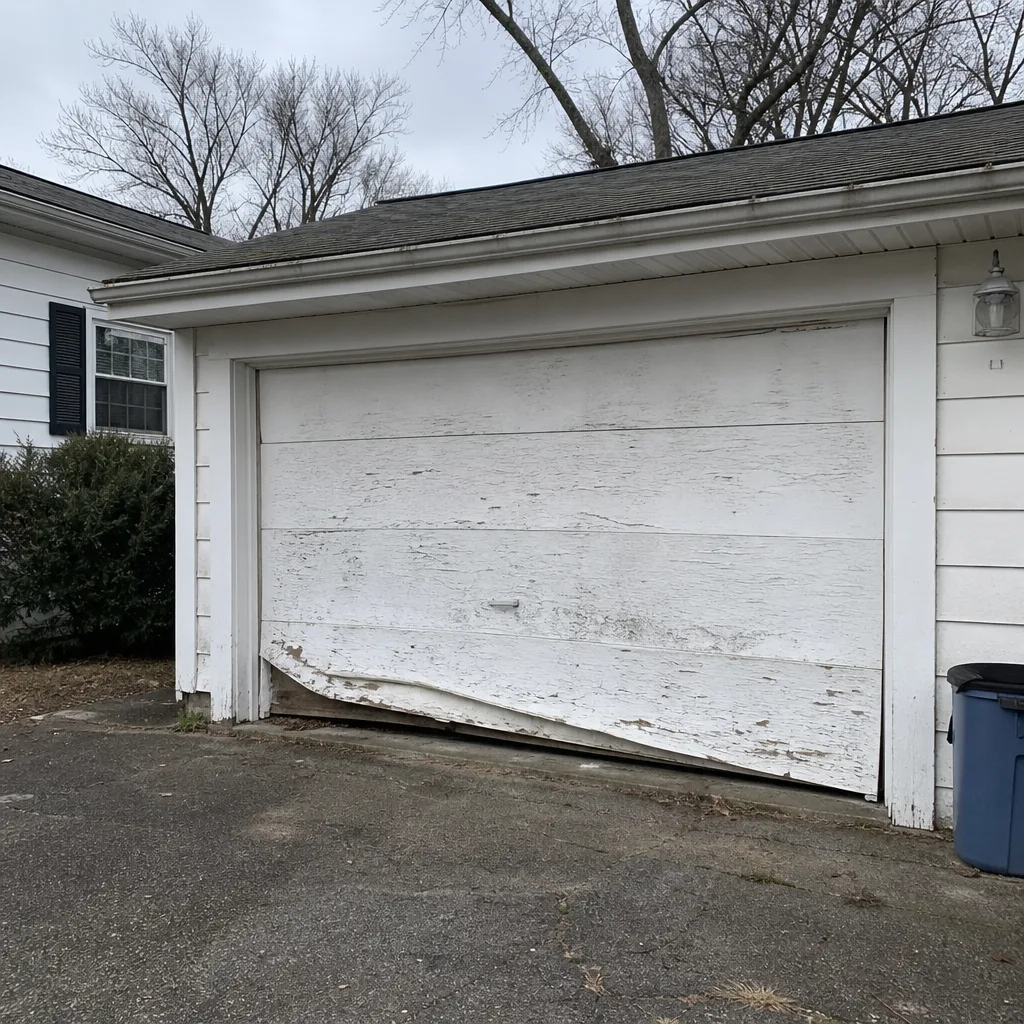 Before
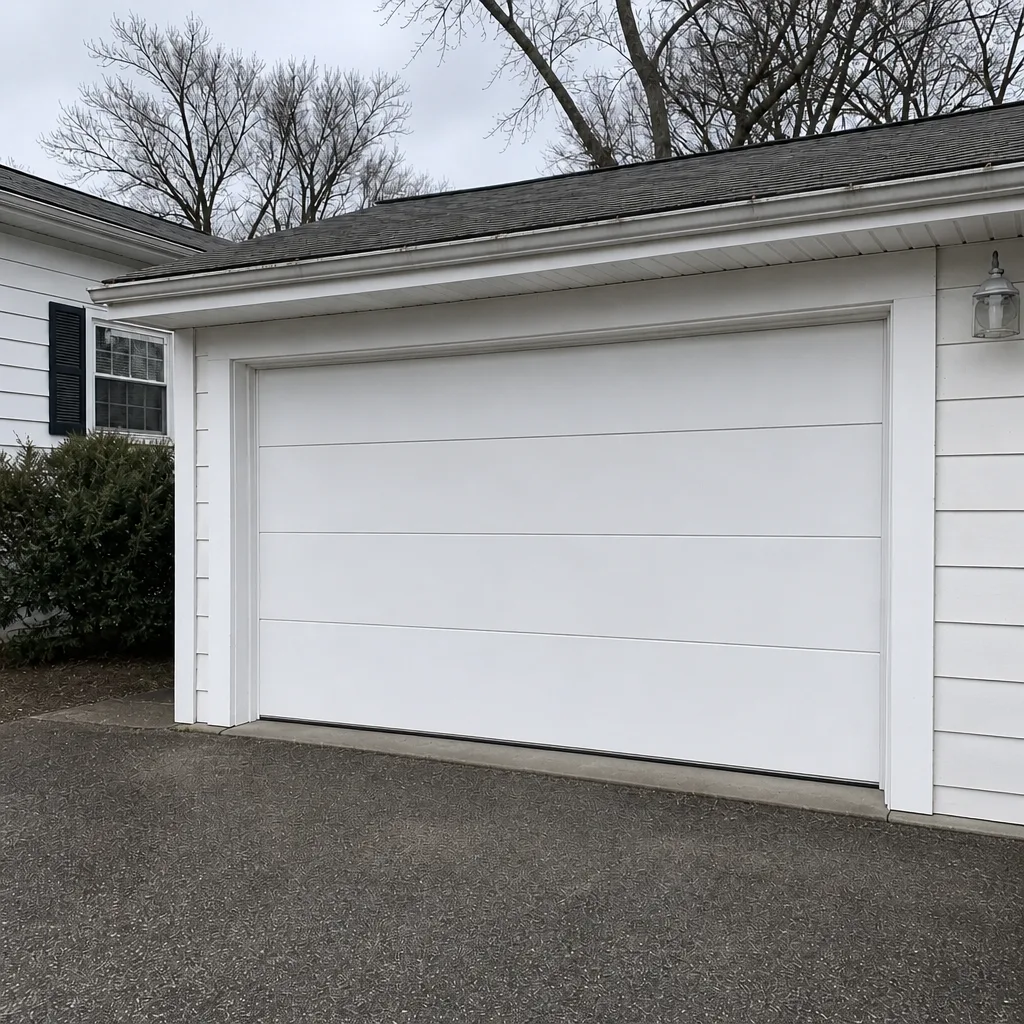 After
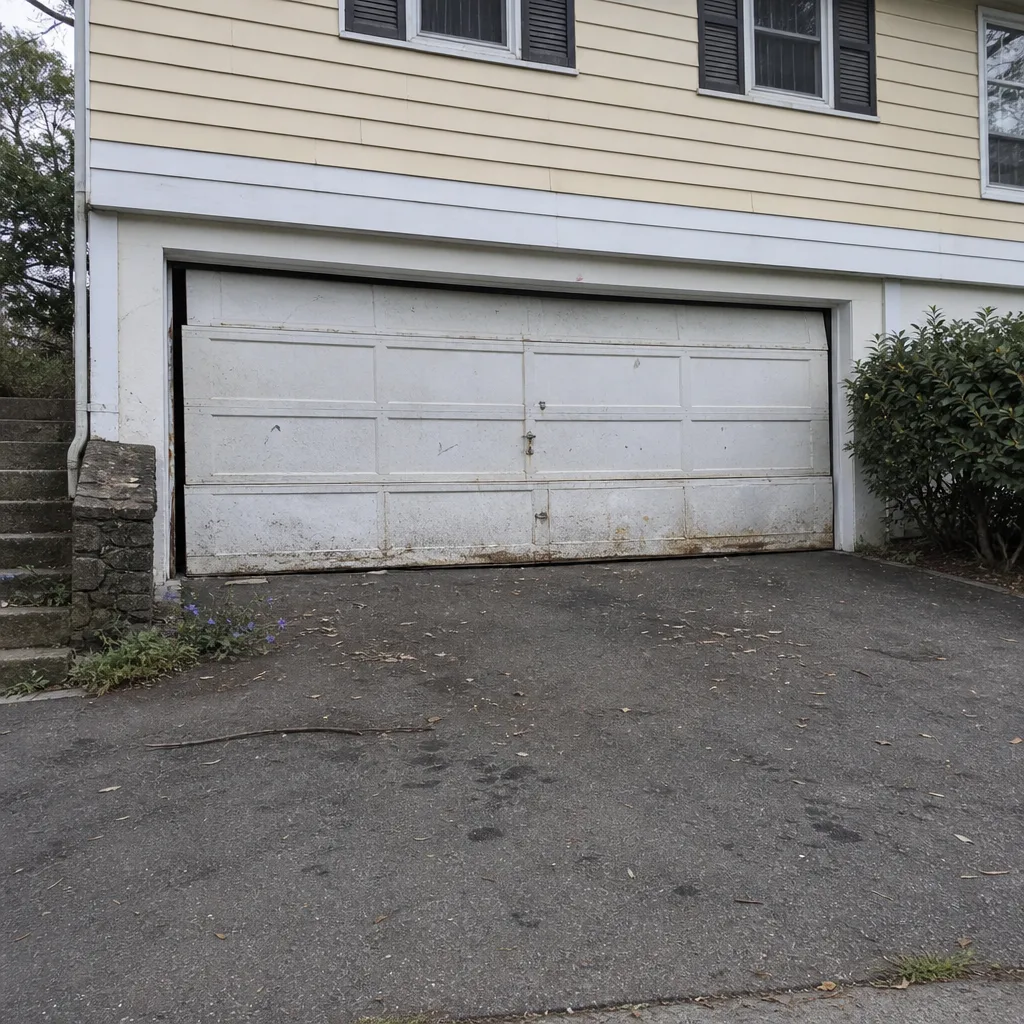 Before
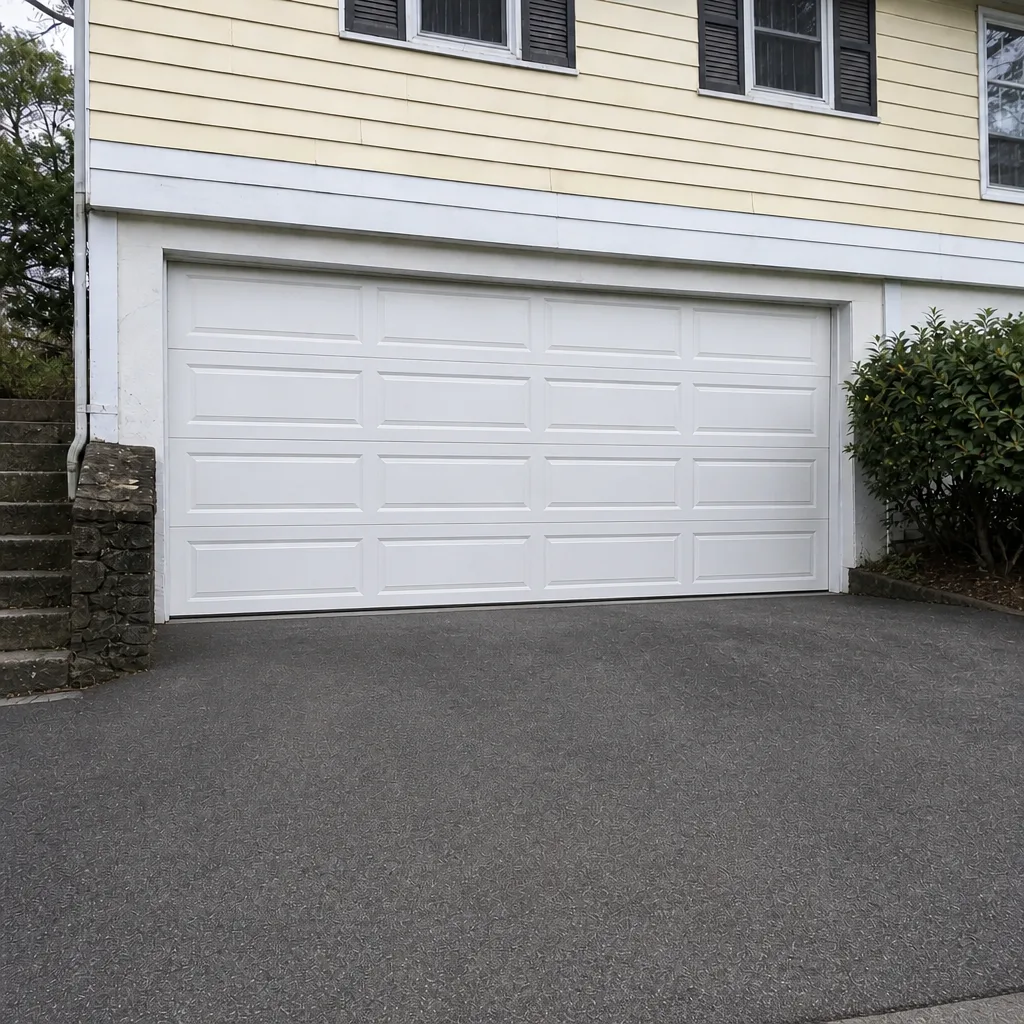 After
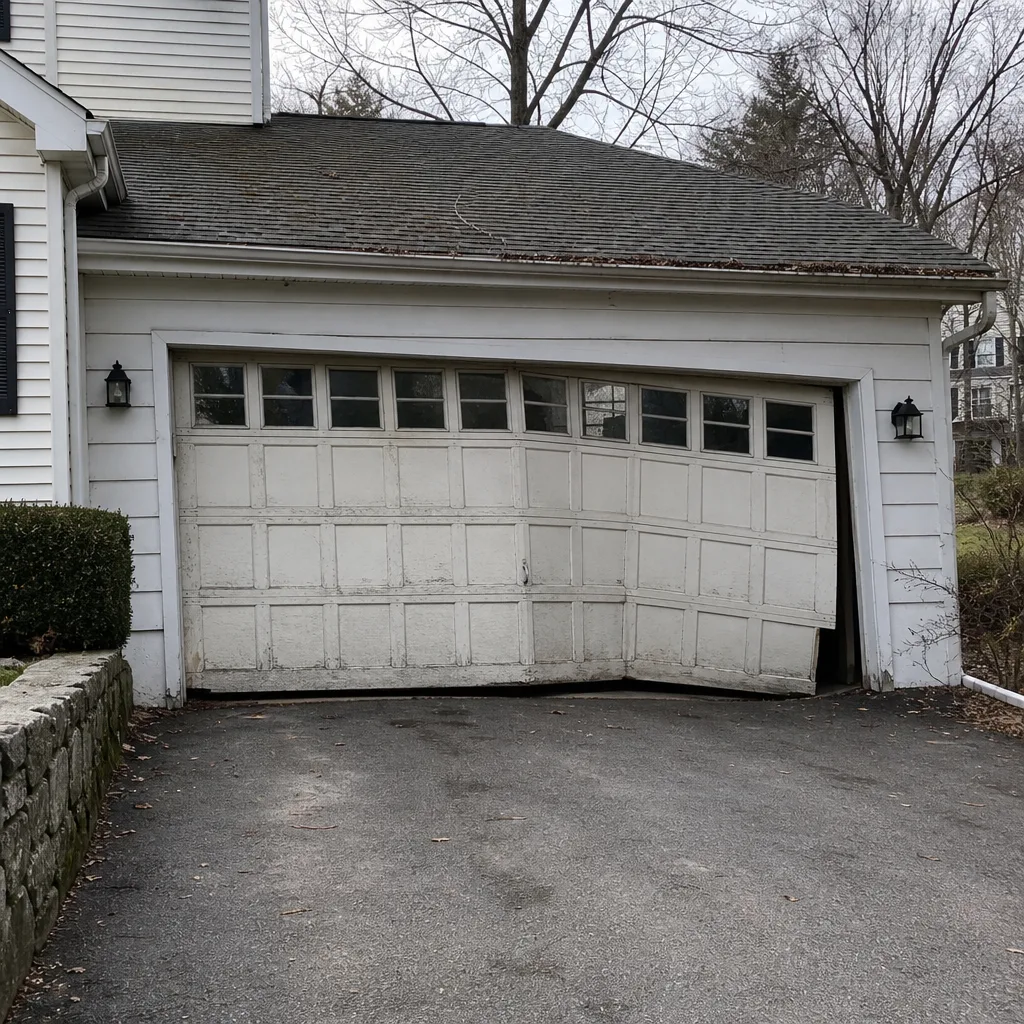 Before
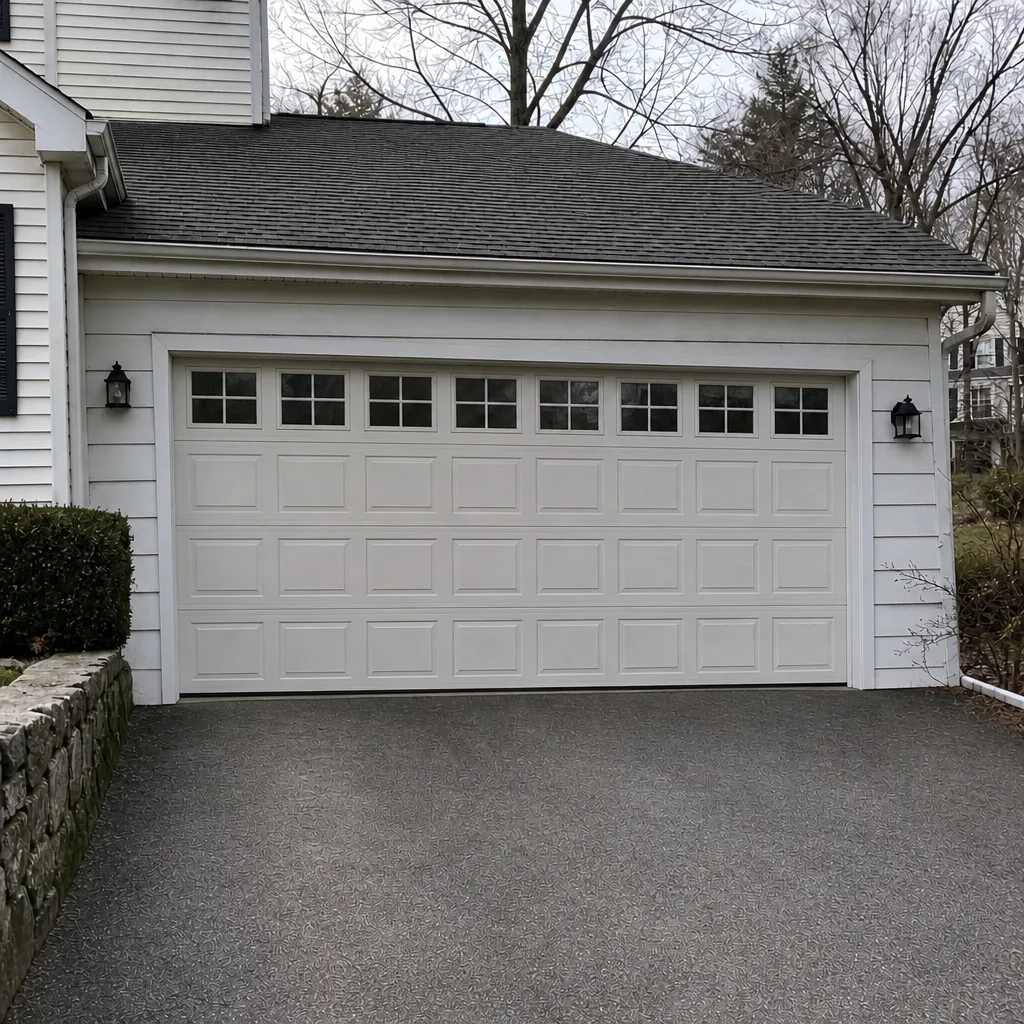 After
When to Call a Professional
Any time the springs, cables, or opener force limits are involved, call a trained technician. Torsion springs and cables are under enough tension to cause serious injury, and adjusting them isn’t a homeowner job, no matter how many videos are online. The same goes for electrical work on the opener circuit or a door that’s come off its tracks. Our technicians are trained on spring repair, and that’s the one part of the job where the DIY route carries real risk.
For a door that won’t move, a panel that’s cracked, or a quote you can’t make sense of, an in-person inspection is the fastest way to a real number. Greenwich Garage Door Repair offers free estimates in Greenwich – call (866) 947-9299. We answer 24/7. Fast dispatch from 7am to 7pm, Sunday through Friday, and we’re closed Saturday. Same-day repair is available when your car is blocked, and the price is always quoted and agreed before any work starts.
Frequently Asked Questions
A full replacement in Greenwich typically runs $1,400 to $4,800 depending on door size, material, and hardware tier, with carriage-style wood and steel overlay doors at the top of that range. Add permit and disposal if they’re not bundled in. The written estimate sets the final price. Call (866) 947-9299 for an exact quote – estimates are free.
The gap comes from local labor rates, Greenwich permit fees, and heavier hardware specs that the climate and the housing stock demand. National cost guides average across lower-cost regions, so their numbers underestimate a Greenwich job by a wide margin. A first-hand quote is always the accurate measure.
A single spring runs $180 to $340 in Greenwich, and a matched pair runs about double that since both springs are usually replaced together. Spring repair is one of the most safety-critical parts of the whole system, so it’s worth having a trained technician handle it rather than a general handyman. Call (866) 947-9299 – estimates are free.
Yes, same-day repair is available for many jobs, and we answer 24/7 to book it. Fast dispatch runs from 7am to 7pm, Sunday through Friday, and we’re closed Saturday. If you call outside dispatch hours, we book you into the next opening. Call (866) 947-9299 for a same-day slot.
No – the price is quoted and agreed before any work starts. What the written estimate says is what you pay, barring a scope change you approve. That’s the standard we hold on every garage door opener repair and full install. Call (866) 947-9299 for a free estimate.
Most cities require a permit for a garage door replacement, and the rules vary by property type and scope. Call Greenwich’s building department directly to confirm what applies to your home. Budget $75 to $250 for the permit if one is required, and make sure it’s on the written quote.
Our technicians are familiar with the most widely installed door and opener brands, including LiftMaster, Chamberlain, Genie, Clopay, Amarr, Wayne Dalton, Craftsman, and Raynor – so if you already own a specific brand, we work on it rather than guessing. They have up to 8 years of experience. Call (866) 947-9299 to book a free estimate.
The Bottom Line
Garage door costs in Greenwich run higher than national averages for real reasons: local labor rates, permit fees, and hardware that has to survive a four-season coastal-region climate. The useful numbers are $180 to $340 for a single spring, $250 to $550 for an opener, and $1,400 to $4,800 for a full door install. Break every quote into line items. Ask about permit, disposal, insulation, and rough-opening sizing before you commit. And never treat the written estimate as a starting point – it’s the price. If you’re ready to get a real number on your door, Greenwich Garage Door Repair is one call away.
Ready for a straight answer on your garage door? Call (866) 947-9299 for a free estimate. We answer 24/7. Fast dispatch from 7am to 7pm, Sunday through Friday, and we’re closed Saturday. Every price is quoted and agreed before we start, and our technicians have up to 8 years of experience with the brands you already own.
Written by the team at Greenwich Garage Door Repair.